
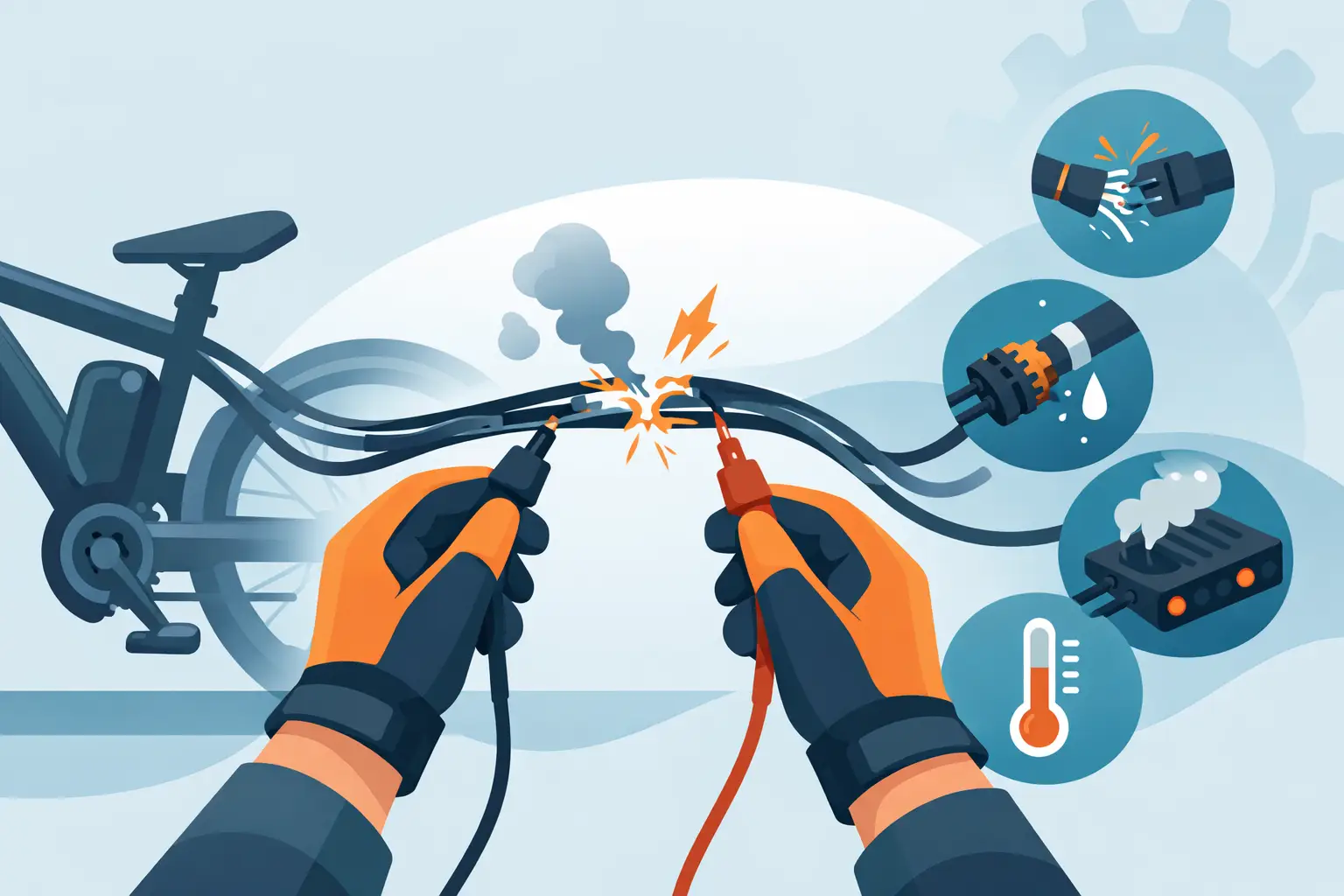
A lot of e-bike electrical problems get blamed on the battery or motor when the real issue is much simpler – damaged wiring, loose connectors, or a bad signal path between components. That is why ebike wiring repair usually starts with diagnosis, not parts swapping. If the bike cuts out under load, shows an error code, loses throttle response, or powers on but will not drive, wiring is often one of the first places to check.
Why ebike wiring repair is often misdiagnosed
On a modern e-bike, the wiring harness ties together the battery, controller, motor, display, throttle, brakes, sensors, lights, and charging system. A single weak connection can create symptoms that look like a failed controller or a bad battery. Riders often notice intermittent power loss, sudden shutoffs over bumps, display resets, or a motor that jerks instead of pulling smoothly.
The reason this gets tricky is that wiring faults are not always constant. A torn conductor inside insulation may still make contact sometimes. A connector can test fine in the stand and fail once the bike is ridden. Water intrusion may cause corrosion that only shows up under load. That is why a proper repair approach looks at both the circuit and the real-world conditions that trigger the problem.
The most common wiring problems on e-bikes
Most electrical harness issues fall into a few categories. The first is physical damage. Wires can get pinched near the head tube, pulled tight during handlebar turns, rubbed by tires, or damaged in crashes and transport. Folding bikes and moped-style e-bikes are especially prone to strain where harnesses bend repeatedly.
The second is connector failure. Many e-bikes use compact waterproof connectors, but waterproof does not mean failure-proof. Pins can back out, seals can tear, and corrosion can build up if moisture gets in. We also see connectors forced together incorrectly, which bends pins and creates weak contact.
The third is heat and current-related damage. High-draw systems, especially on powerful hub motor bikes, can overheat phase wires or battery leads. Melted insulation, darkened connectors, and voltage drop under acceleration are common clues. If the bike has been modified, the risk goes up. An upgraded controller paired with stock wiring can create problems fast.
The fourth is poor previous repair work. Twisted wires, household crimp connectors, electrical tape wrapped around damaged sections, and mismatched wire gauge all lead to unreliable operation. A repair may seem fine for a week, then fail at the worst time.
Signs your e-bike may need wiring repair
Some symptoms point strongly toward harness or connector problems. If the display turns on but the motor does not respond, the fault may be in the throttle, brake cutoff, pedal assist sensor, hall sensor line, or communication wiring. If the bike works until you turn the bars, there may be a damaged section near the front harness. If it runs normally on a stand but cuts out on the road, that often suggests vibration, heat, or load-related wiring failure.
Charging problems can also come from wiring. Riders assume the battery pack is dead, but sometimes the issue is at the charge port, charge lead, fuse path, or BMS-related wiring inside the battery assembly. Likewise, a bike that shows low voltage too quickly may have resistance in the battery leads or power connectors rather than a completely worn-out pack.
Burning smell, visible melted plastic, flickering display, random error codes, and inconsistent brake cutoffs are all worth taking seriously. Electrical issues rarely improve on their own.
What proper ebike wiring repair looks like
A good repair is more than covering exposed wire and sending the bike back out. The first step is identifying the failed section and understanding why it failed. If a wire broke because it was routed too tightly, simply splicing it without correcting the routing sets up the same failure again.
A proper process usually includes visual inspection, continuity testing, voltage checks, load testing, and connector inspection. On some bikes, the harness needs to be partially opened to find hidden damage inside loom or insulation. On others, the issue is inside the motor cable, battery cradle, or controller compartment.
Once the fault is confirmed, the repair method depends on the location and severity. Minor harness damage may be repaired with the correct gauge wire, sealed connections, and proper strain relief. Connector damage may require depinning and replacing terminals or installing a new matching connector. Heat-damaged phase wiring may need a more extensive rebuild because the surrounding insulation and adjacent conductors may also be compromised.
The best outcome is a repair that restores reliability, not just temporary function.
When a wire repair is enough – and when it is not
Not every electrical problem should be solved with a splice. Sometimes the damaged section is isolated and accessible, which makes repair practical and cost-effective. Other times, the wiring problem is part of a larger failure. For example, if a controller short has overheated the phase wires, replacing the wire alone will not solve the root cause. If water intrusion has traveled through multiple connectors, one cleaned plug may not be enough.
This is where experience matters. A technician should look at the full circuit, not just the obvious damage. On e-bikes with repeated cutoff issues, the battery, controller, and motor communication all need to make sense together. It depends on the bike, the components, and how the failure happened.
In some cases, replacing a full harness is the smarter option. That is especially true when there are multiple damaged sections, brittle insulation, widespread corrosion, or factory-molded connectors that cannot be restored reliably. A full replacement costs more up front but can save money compared with chasing recurring intermittent faults.
DIY risks riders should know about
Basic inspection is reasonable for many owners. You can look for crushed cables, unplugged connectors, obvious corrosion, and damage from crashes or rubbing. But actual electrical repair carries some real risks.
The biggest issue is misdiagnosis. It is easy to replace a connector and miss the failed hall sensor line inside the motor cable, or blame a battery lead when the controller is causing the drop. Another common problem is using the wrong materials. Automotive parts, generic crimp tools, or random connectors may not match the current, waterproofing, or pin layout required by the bike.
There is also the safety side. Battery wiring can be unforgiving. A short on the main power side can damage components quickly and create a fire risk. Even signal wiring matters because one crossed connection can damage a display, controller, or sensor circuit.
If the bike is still under warranty, DIY wiring work can also complicate future support.
Why diagnosis matters more than guessing
The same symptom can come from several different faults. A no-power complaint could be the battery, fuse, controller, ignition line, display communication, or main harness. Motor stutter could come from phase wiring, hall sensor faults, controller failure, or internal motor damage. That is why swapping parts without testing often gets expensive.
For riders in San Diego using their e-bike for commuting, school runs, weekend riding, or delivery work, downtime matters. A diagnostic-first approach saves time because it narrows the problem before money gets spent on unnecessary parts. At FixEbike, that is a big part of how difficult electrical issues get solved efficiently.
Preventing repeat wiring failures
Some wiring damage is accidental, but a lot of repeat failures come from stress points that were never addressed. Harnesses need enough slack for steering movement without rubbing. Cables near the fork crown and head tube should be checked regularly. Battery connectors should fit tightly and stay clean. If the bike has had aftermarket changes, the wiring should be reviewed to make sure the system is still matched correctly.
Storage matters too. Leaving an e-bike outside full time, washing it aggressively, or transporting it in a way that strains cables can shorten harness life. Riders with fat-tire bikes, off-road models, or moped-style frames should pay extra attention because vibration and heavier use tend to expose weak spots faster.
When the first sign shows up – flickering display, intermittent cutout, throttle delay, random motor hesitation – it is better to address it early. Small wiring problems have a habit of turning into larger electrical repairs if they are ignored.
A good e-bike should feel dependable every time you press the power button. If yours does not, the problem may be hidden in the wiring, but it does not have to stay a mystery for long.