
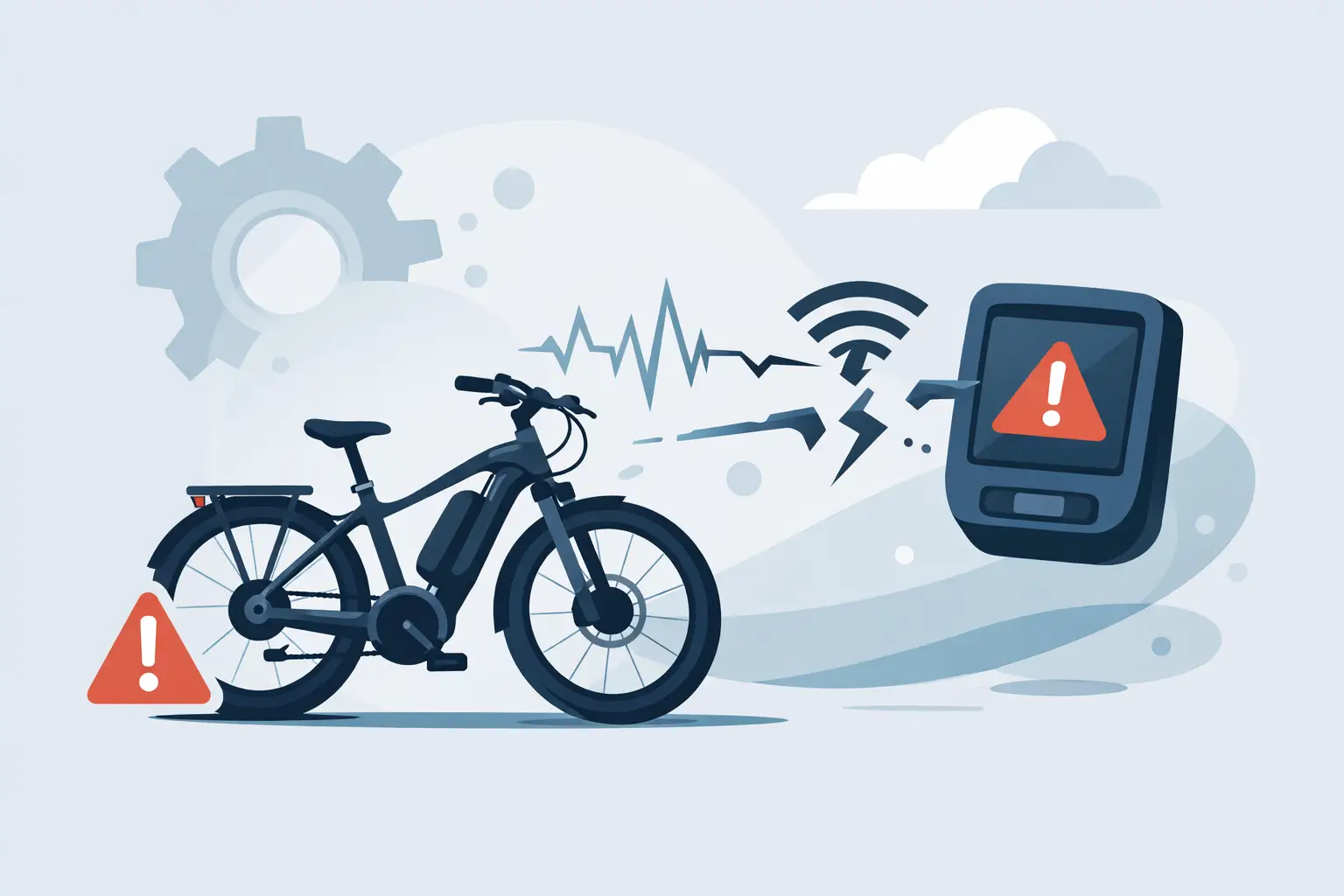
Your bike powers on, the screen lights up, and then everything stops at a vague message. An ebike communication error is one of the most frustrating faults to deal with because it sounds precise, but it usually means one component has stopped talking to another. That can be a simple connection issue, or it can point to a deeper problem in the display, controller, wiring harness, battery output, or motor system.
This kind of error matters because modern e-bikes rely on constant data exchange. The display sends commands, the controller interprets them, the battery provides power, and the motor responds based on sensor input. If one part drops out, the bike may refuse to assist, cut power under load, or fail to start at all. In some cases, the bike will still roll like a regular bicycle. In others, it becomes unreliable enough that riding it is not worth the risk.
What an ebike communication error usually means
On most e-bikes, a communication fault does not mean the entire bike is dead. It means the control system has detected missing, corrupted, or inconsistent signals between key electrical components. Brands use different codes and wording, but the pattern is similar. The bike is expecting a response from the display, controller, battery management system, motor, or sensor network, and it is not getting it.
That is why these errors can feel inconsistent. One rider may see the error only when hitting bumps. Another may get it after charging. Someone else may have a bike that powers on normally but loses assist a minute into the ride. The fault message is the symptom. The cause can sit anywhere in the communication path.
The most common causes of ebike communication error faults
The most common culprit is wiring. E-bikes vibrate, fold, get loaded into cars, sit in the heat, and sometimes take minor impacts. Over time, connectors loosen, pins bend, insulation rubs through, or moisture gets into a plug. A communication line does not need major visible damage to fail. One weak pin fit or one partially backed-out connector can be enough.
Displays are another common source. Riders often assume the display is just a screen, but it is part of the control network. If the display has water intrusion, internal board failure, or damage at the cable exit point, the bike may throw a communication error even when the battery and motor are fine.
Controllers also fail in ways that look like a communication problem. The controller is the traffic manager of the system. If its internal circuitry is unstable, if it has heat damage, or if there is corrosion at the terminals, it may stop recognizing signals from the display or motor hall sensors.
Battery issues can also trigger communication faults, especially on bikes with smart batteries or battery management systems that communicate with the controller. A weak battery connection, damaged discharge port, low voltage under load, or BMS fault can interrupt normal startup or cause repeated error messages.
Then there is compatibility. This comes up more than many riders expect. If a display, controller, or battery was replaced with the wrong version, even a part that physically plugs in may not communicate correctly. That is especially common on bikes with proprietary systems or multiple revisions of the same model.
How the problem shows up in real riding conditions
Some bikes show the error immediately at startup. That often points to a hard communication break such as a disconnected display cable, failed controller, or battery issue that prevents the system from initializing.
Other bikes behave normally until throttle or pedal assist is used. That can suggest voltage sag, intermittent wiring, a controller problem, or a motor-side issue that appears only when the system is asked to deliver current.
Intermittent faults are usually the hardest to pin down. If the bike works on the stand but fails on the road, movement and load become part of the diagnosis. A damaged harness near the head tube, folding joint, downtube entry point, or rear axle can open and close with motion. Riders often describe this as the bike cutting in and out for no clear reason.
What you can safely check at home
Before assuming the worst, there are a few basic checks that make sense. Power the bike off fully, remove the battery if the design allows it, wait a minute, and restart everything. That will not fix a damaged component, but it can clear a temporary fault caused by a startup glitch.
Next, inspect the visible connectors. Look closely at the display cable, battery terminals, motor cable, and any quick-disconnect plugs along the frame. You are looking for loose connections, bent pins, corrosion, dirt, or signs that a connector was forced together incorrectly. On many e-bikes, alignment arrows matter. If a plug is rotated wrong and pushed in, the pins can get damaged.
Check for obvious cable stress points. The front end of the bike is a frequent problem area because the bars turn constantly and the harness flexes there every ride. If the cable jacket is split, pinched, or stretched tight, that deserves attention.
If the battery has a charge indicator, confirm it is actually charged. A battery can show some life and still drop voltage badly under load. That is not always visible without proper testing, but if the bike recently started cutting out after shorter rides or after sitting unused, the battery should stay on the suspect list.
What you should not do is start swapping random parts or cutting into harnesses without a wiring diagram. That tends to turn a clean diagnostic process into a more expensive repair.
Why guessing is expensive with communication faults
A lot of riders replace the display first because it is visible and easy to blame. Sometimes that works. Often it does not. The same goes for controllers, batteries, and motors. Communication errors overlap across multiple systems, and without testing, part replacement becomes guesswork.
The right approach is to verify power delivery, inspect communication lines, isolate components, and test known-good substitutes where appropriate. That matters because one failed connector can mimic a bad controller, and one weak controller can look like a battery issue. On some bikes, a damaged hall sensor circuit or shorted peripheral can bring down communication across the whole system.
This is also why brand-specific knowledge matters. Error code meanings are not universal. One manufacturer may use a communication code for display-to-controller failure, while another uses similar wording for controller-to-motor problems. The message on the screen is only the starting point.
When the issue is probably not a DIY fix
If the error keeps returning after reconnecting everything, if the bike cuts out while riding, or if there are signs of heat, burning smell, water damage, or melted connectors, the bike needs proper electrical diagnosis. The same goes for bikes that have had recent crash damage, aftermarket wiring changes, or replacement parts installed.
Battery and controller faults deserve extra caution. A failing high-current connection can overheat. A battery with internal problems can behave unpredictably. Even if the bike still turns on, that does not mean it is safe to keep riding until it fully quits.
For riders in San Diego, especially those using their e-bike for commuting, school runs, or regular errands, downtime matters. A communication error is one of those problems that often gets worse before it gets better. Small intermittent faults have a habit of becoming complete no-start conditions.
How a shop diagnoses an ebike communication error
A proper diagnostic starts with the bike’s exact symptom pattern. Does it fail on startup, under throttle, after charging, or after a bump? Then the electrical side gets checked systematically: battery voltage, connector condition, continuity through suspect wiring, display response, controller output behavior, and motor or sensor communication where the system allows it.
In many cases, the fastest path is not replacing parts. It is isolating where communication stops. If a known-good display still does not talk to the controller, the issue moves downstream. If battery output is unstable, there is no point blaming the screen. If a harness shows intermittent continuity loss when flexed, that may be the whole repair.
That diagnostic-first approach is what keeps repairs accurate and fair. At FixEbike, communication faults are treated like electrical problems, not mystery codes. That means checking the system as a whole instead of assuming the most obvious part is the bad one.
Preventing future communication errors
Not every communication fault is preventable, but a few habits help. Avoid pressure washing near connectors or displays. Make sure the battery is seated correctly every time. If the bars feel tight against the harness when turning, deal with that before the wiring starts breaking internally. And if the bike has already shown one intermittent electrical symptom, get it checked before a minor connector issue takes out a controller or leaves you stranded.
A helpful way to think about it is this: when an e-bike reports a communication problem, it is telling you the system has lost trust in one of its own signals. Sometimes the fix is simple. Sometimes it takes component-level testing to find the real fault. Either way, the sooner the issue is diagnosed, the sooner the bike gets back to being reliable.