
Battery Rebuild Versus Replacement Explained

A battery that will not charge, cuts out under load, or loses range quickly does not automatically need to be replaced. The right call in a battery rebuild versus replacement decision depends on what failed inside the pack, whether the case and electronics are still sound, and whether the battery can be repaired safely for your specific e-bike.

For riders, the symptoms often look simple: the charger stays green, the display shuts off on a hill, or a once-reliable bike now travels only a few miles. Inside the battery, however, the cause may be worn cells, a failed battery management system, a damaged charge port, loose nickel connections, water intrusion, or an issue outside the battery altogether. A controller, wiring harness, motor fault, or charger can imitate a battery failure. That is why diagnosis comes before a quote.

Battery Rebuild Versus Replacement: The Real Difference

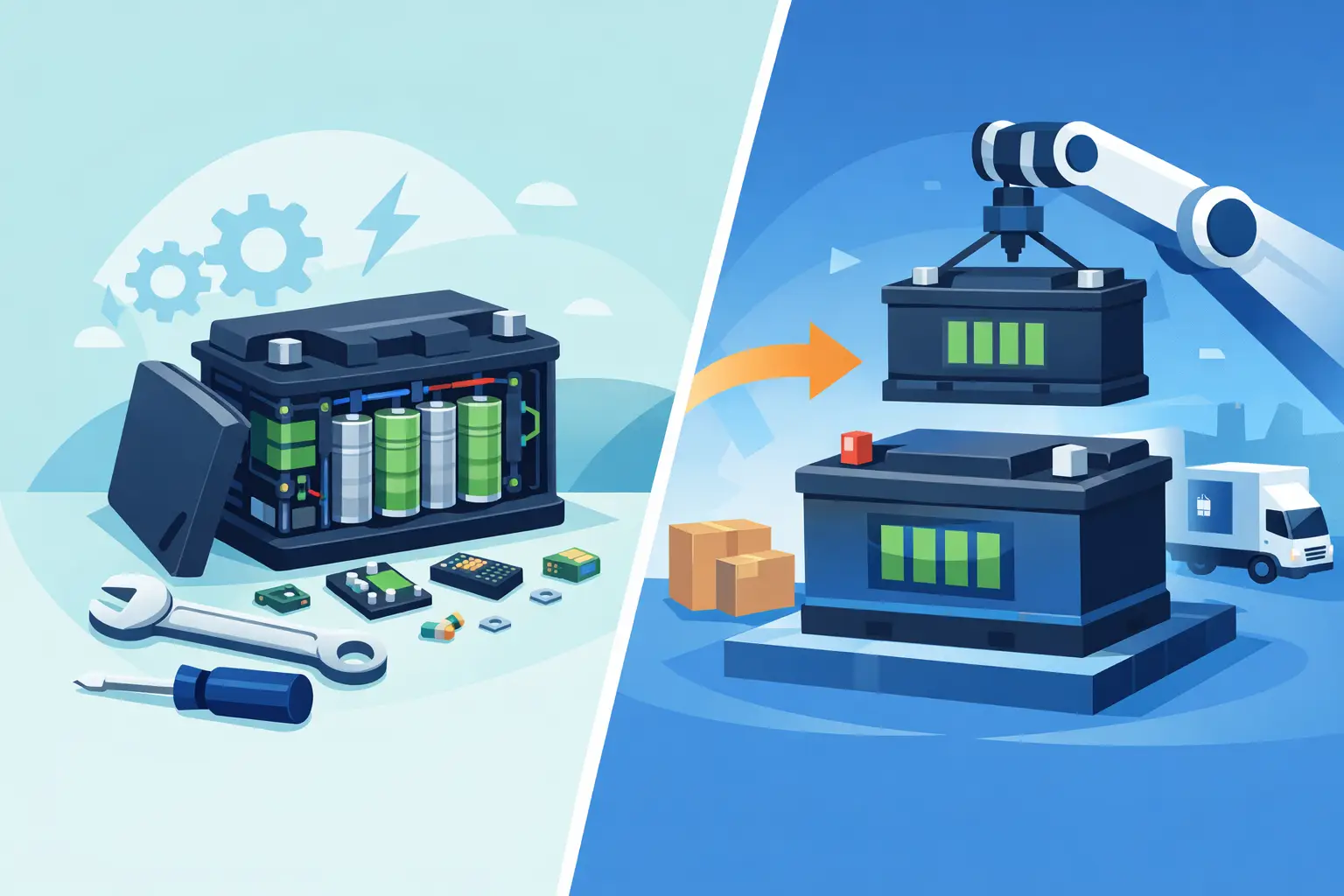
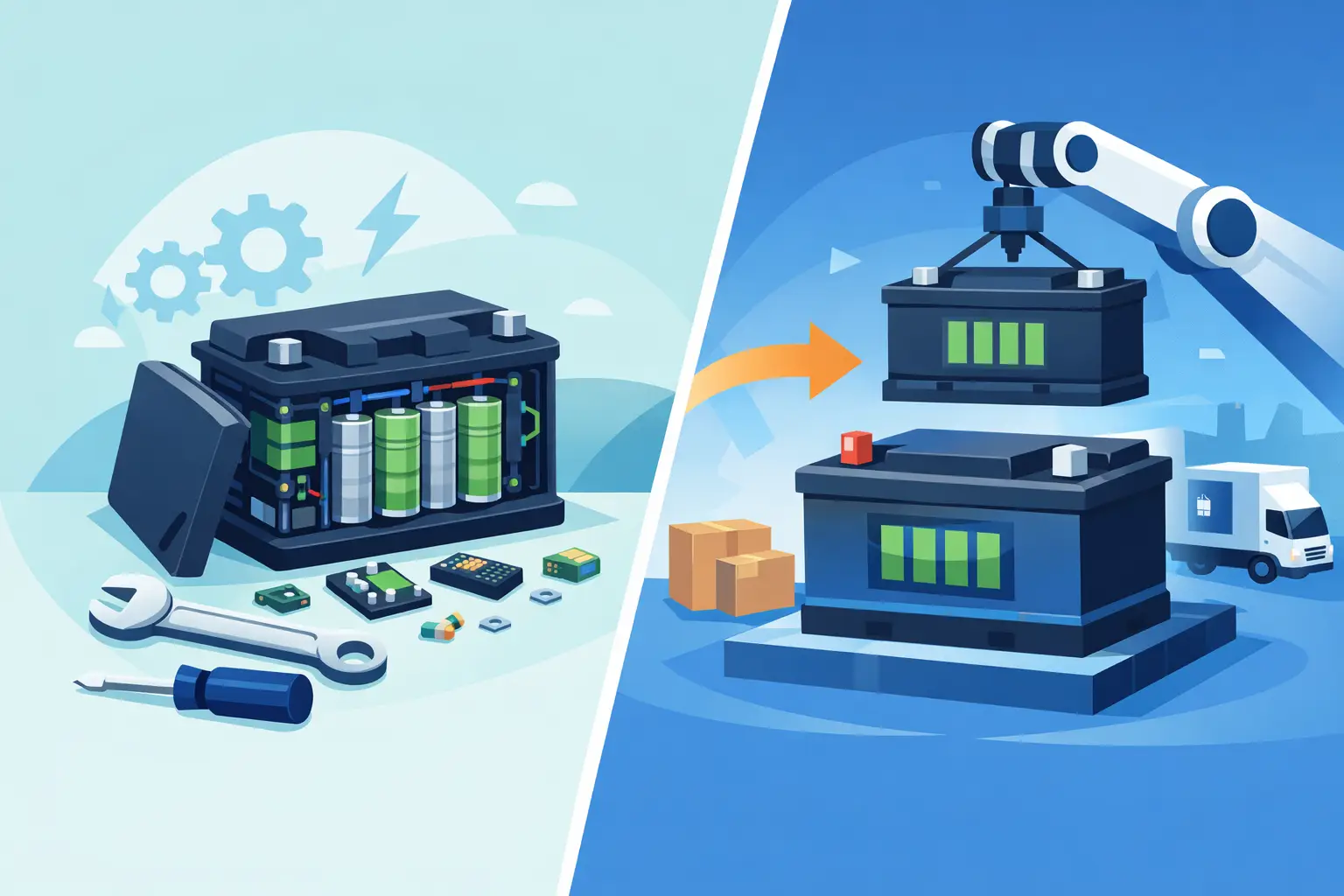
A battery rebuild means opening an existing battery case, evaluating the internal components, and replacing failed or worn cell groups when the pack is a suitable candidate. Depending on the battery design and condition, a rebuild may also involve replacing the battery management system, repairing internal connections, restoring the charge or discharge wiring, and testing the completed pack under load.

Replacement means installing a new compatible battery. This may be an original manufacturer battery, a properly specified aftermarket pack, or in some cases a new battery and mounting solution designed around an older e-bike. It is usually the cleaner option when the original housing is damaged, the pack is heavily corroded, parts are unavailable, or the battery’s communication system cannot be reliably restored.

Neither option is automatically cheaper or better. A low-quality replacement battery can create fitment, charging, connector, or safety problems. On the other hand, rebuilding a severely damaged pack simply to avoid buying a new one is not good value. The correct choice is the one that returns the bike to dependable, safe operation.

Start With a Proper Battery Diagnosis

The first job is to determine whether the battery is actually the source of the problem. Voltage at the discharge port is useful, but it is not the whole story. A battery can show normal resting voltage and still fail as soon as the motor demands current. This is common when one parallel cell group has weakened, a connection has high resistance, or the BMS is shutting down under load.

A useful diagnosis checks the battery’s resting voltage, charge behavior, output under load, connector condition, and voltage drop. On many e-bikes, the technician also needs to inspect the charger, battery cradle, wiring harness, controller, display, and motor connections. If the bike reports an error code or has intermittent power, communication and signal wiring may matter just as much as battery capacity.

Physical inspection matters too. Cracked cases, swollen cells, heat damage, burned terminals, corrosion, or signs of water entry change the repair conversation immediately. A pack with swelling or serious water damage is not something to keep riding while you wait for an answer.

Problems That Can Look Like a Bad Battery

A dead display does not always mean a dead pack. A blown fuse, damaged key switch, failed battery cradle contact, broken wire near the steering tube, or controller fault can interrupt power. Likewise, a motor that loses power on climbs may have a phase-wire, hall-sensor, controller, or drivetrain issue rather than a weak battery.

This distinction matters because replacing a battery without testing the system can leave you with the same problem and a larger bill. It also matters for safety. Repeatedly connecting a new battery to a shorted or damaged electrical system can harm the new pack.

When a Battery Rebuild Makes Sense

Rebuilding is most appealing when the original battery case, mounting rail, and overall form factor are difficult to replace. Many e-bikes use proprietary frame-integrated packs that are no longer sold, especially older commuter bikes, fat-tire models, and moped-style e-bikes. If the enclosure is intact and the failure is limited to serviceable internal components, a rebuild can preserve the bike’s original fit and function.

A rebuild may also make sense when the battery’s cell groups have aged normally but the BMS, fuse, charge port, or internal connections need attention. In a properly designed and repairable pack, replacing worn cells with correctly matched cells can restore useful range and power delivery while retaining the factory case and connector layout.

The word “properly” is doing a lot of work here. E-bike batteries are high-energy systems. Cells need to be matched, configured correctly, securely connected, insulated, protected, and tested. The BMS must support the pack voltage, current demand, charging profile, and balance requirements. A repair that only gets the battery to turn on is not enough. It needs to perform safely under real riding loads.

Rebuilding is less attractive when the case has suffered major impact damage, the pack has extensive corrosion, the design is sealed in a way that cannot be safely serviced, or the bike relies on proprietary digital communication that cannot be maintained after repair. Some batteries are simply not good rebuild candidates.

When Replacement Is the Better Call

Replacement is usually the practical choice when a safe rebuild would require too many parts or too much labor. If the enclosure, BMS, cell groups, terminals, and charge hardware are all compromised, a new battery is often more predictable than trying to salvage a pack with multiple failure points.

A replacement can also offer a warranty advantage, particularly when an original manufacturer battery remains available. For newer bikes, OEM replacement often provides the best fit, correct communication with the bike’s electronics, and straightforward charging compatibility. It may cost more up front, but that added cost can be justified when the bike depends on a proprietary battery rail, key system, display, or controller protocol.

For discontinued e-bikes, replacement is not always as simple as ordering a pack with the same voltage. Voltage is only one requirement. The new battery must fit physically, use the correct connector and polarity, provide adequate continuous current, work with the charger, and be compatible with the bike’s controller. A 48V battery that physically connects but cannot supply enough current may cut out under acceleration. A pack with incorrect wiring can damage components.

Aftermarket batteries vary widely. A well-built unit from a reputable source can be a reasonable solution for the right bike. An unknown pack with vague specifications, poor cell documentation, or questionable protection circuitry is a risk not worth taking, especially for bikes stored in garages, apartments, or family homes.

Cost Is More Than the Price of the Pack

It is understandable to compare a rebuild quote with the listed price of a replacement battery. But the lower number is not always the lower total cost. A replacement may require a new mount, adapter, connector conversion, charger, or electrical modifications. A rebuild may involve diagnostic labor and additional repairs if the original issue includes the BMS or wiring.

Expected service life matters as well. If a replacement battery has a clear warranty and known specifications, it may be the better long-term value. If your existing case is rare and the underlying pack is otherwise healthy, rebuilding can keep a dependable bike on the road without redesigning the power system.

The bike itself should be part of the decision. On a well-maintained e-bike with a strong motor, sound frame, good brakes, and parts you like, investing in the right battery solution is often worthwhile. If the bike also needs major controller work, drivetrain service, brake replacement, and tire replacement, it is worth looking at the whole repair picture before committing.

Battery Safety and Everyday Habits

Whether you rebuild or replace, treat the battery as the component that deserves the most care. Use the correct charger, keep the terminals clean and dry, and avoid charging a battery that has been dropped, overheated, swollen, or exposed to significant water. Do not leave a suspect battery charging unattended.

Range loss alone is usually a wear issue. Sudden shutoffs, a hot battery case, a burning smell, melted connectors, unusual charging behavior, or visible swelling are different. Stop using the bike and have it inspected. Trying to force a damaged battery through another ride or charge cycle can turn a repairable issue into a safety hazard.

For San Diego riders, heat is also a real factor. Leaving an e-bike battery in a hot vehicle or direct sun for long periods accelerates cell aging. Charging after a hard ride is fine once the pack has cooled, but charging a battery while it is still unusually hot is not a good habit.

The Best Choice Is the One Based on Evidence

Battery rebuild versus replacement should not be decided from a symptom, a photo, or an online price alone. The battery needs to be tested alongside the system it powers. At FixEbike, that diagnostic-first approach helps identify whether the problem is cells, BMS protection, charging hardware, connections, or another electrical fault that only appears to be a battery issue.

If your e-bike has started losing range, shutting down, refusing to charge, or acting differently under load, stop guessing at parts. A clear diagnosis gives you a realistic repair path and lets you spend money on the solution that will keep your rides reliable.
Leave a Reply

Your email address will not be published. Required fields are marked *


Battery Rebuild Versus Replacement Explained

A battery that will not charge, cuts out under load, or loses range quickly does not automatically need to be replaced. The right call in a battery rebuild versus replacement decision depends on what failed inside the pack, whether the case and electronics are still sound, and whether the battery can be repaired safely for your specific e-bike.

For riders, the symptoms often look simple: the charger stays green, the display shuts off on a hill, or a once-reliable bike now travels only a few miles. Inside the battery, however, the cause may be worn cells, a failed battery management system, a damaged charge port, loose nickel connections, water intrusion, or an issue outside the battery altogether. A controller, wiring harness, motor fault, or charger can imitate a battery failure. That is why diagnosis comes before a quote.

Battery Rebuild Versus Replacement: The Real Difference

A battery rebuild means opening an existing battery case, evaluating the internal components, and replacing failed or worn cell groups when the pack is a suitable candidate. Depending on the battery design and condition, a rebuild may also involve replacing the battery management system, repairing internal connections, restoring the charge or discharge wiring, and testing the completed pack under load.

Replacement means installing a new compatible battery. This may be an original manufacturer battery, a properly specified aftermarket pack, or in some cases a new battery and mounting solution designed around an older e-bike. It is usually the cleaner option when the original housing is damaged, the pack is heavily corroded, parts are unavailable, or the battery’s communication system cannot be reliably restored.

Neither option is automatically cheaper or better. A low-quality replacement battery can create fitment, charging, connector, or safety problems. On the other hand, rebuilding a severely damaged pack simply to avoid buying a new one is not good value. The correct choice is the one that returns the bike to dependable, safe operation.

Start With a Proper Battery Diagnosis

The first job is to determine whether the battery is actually the source of the problem. Voltage at the discharge port is useful, but it is not the whole story. A battery can show normal resting voltage and still fail as soon as the motor demands current. This is common when one parallel cell group has weakened, a connection has high resistance, or the BMS is shutting down under load.

A useful diagnosis checks the battery’s resting voltage, charge behavior, output under load, connector condition, and voltage drop. On many e-bikes, the technician also needs to inspect the charger, battery cradle, wiring harness, controller, display, and motor connections. If the bike reports an error code or has intermittent power, communication and signal wiring may matter just as much as battery capacity.

Physical inspection matters too. Cracked cases, swollen cells, heat damage, burned terminals, corrosion, or signs of water entry change the repair conversation immediately. A pack with swelling or serious water damage is not something to keep riding while you wait for an answer.

Problems That Can Look Like a Bad Battery

A dead display does not always mean a dead pack. A blown fuse, damaged key switch, failed battery cradle contact, broken wire near the steering tube, or controller fault can interrupt power. Likewise, a motor that loses power on climbs may have a phase-wire, hall-sensor, controller, or drivetrain issue rather than a weak battery.

This distinction matters because replacing a battery without testing the system can leave you with the same problem and a larger bill. It also matters for safety. Repeatedly connecting a new battery to a shorted or damaged electrical system can harm the new pack.

When a Battery Rebuild Makes Sense

Rebuilding is most appealing when the original battery case, mounting rail, and overall form factor are difficult to replace. Many e-bikes use proprietary frame-integrated packs that are no longer sold, especially older commuter bikes, fat-tire models, and moped-style e-bikes. If the enclosure is intact and the failure is limited to serviceable internal components, a rebuild can preserve the bike’s original fit and function.

A rebuild may also make sense when the battery’s cell groups have aged normally but the BMS, fuse, charge port, or internal connections need attention. In a properly designed and repairable pack, replacing worn cells with correctly matched cells can restore useful range and power delivery while retaining the factory case and connector layout.

The word “properly” is doing a lot of work here. E-bike batteries are high-energy systems. Cells need to be matched, configured correctly, securely connected, insulated, protected, and tested. The BMS must support the pack voltage, current demand, charging profile, and balance requirements. A repair that only gets the battery to turn on is not enough. It needs to perform safely under real riding loads.

Rebuilding is less attractive when the case has suffered major impact damage, the pack has extensive corrosion, the design is sealed in a way that cannot be safely serviced, or the bike relies on proprietary digital communication that cannot be maintained after repair. Some batteries are simply not good rebuild candidates.

When Replacement Is the Better Call

Replacement is usually the practical choice when a safe rebuild would require too many parts or too much labor. If the enclosure, BMS, cell groups, terminals, and charge hardware are all compromised, a new battery is often more predictable than trying to salvage a pack with multiple failure points.

A replacement can also offer a warranty advantage, particularly when an original manufacturer battery remains available. For newer bikes, OEM replacement often provides the best fit, correct communication with the bike’s electronics, and straightforward charging compatibility. It may cost more up front, but that added cost can be justified when the bike depends on a proprietary battery rail, key system, display, or controller protocol.

For discontinued e-bikes, replacement is not always as simple as ordering a pack with the same voltage. Voltage is only one requirement. The new battery must fit physically, use the correct connector and polarity, provide adequate continuous current, work with the charger, and be compatible with the bike’s controller. A 48V battery that physically connects but cannot supply enough current may cut out under acceleration. A pack with incorrect wiring can damage components.

Aftermarket batteries vary widely. A well-built unit from a reputable source can be a reasonable solution for the right bike. An unknown pack with vague specifications, poor cell documentation, or questionable protection circuitry is a risk not worth taking, especially for bikes stored in garages, apartments, or family homes.

Cost Is More Than the Price of the Pack

It is understandable to compare a rebuild quote with the listed price of a replacement battery. But the lower number is not always the lower total cost. A replacement may require a new mount, adapter, connector conversion, charger, or electrical modifications. A rebuild may involve diagnostic labor and additional repairs if the original issue includes the BMS or wiring.

Expected service life matters as well. If a replacement battery has a clear warranty and known specifications, it may be the better long-term value. If your existing case is rare and the underlying pack is otherwise healthy, rebuilding can keep a dependable bike on the road without redesigning the power system.

The bike itself should be part of the decision. On a well-maintained e-bike with a strong motor, sound frame, good brakes, and parts you like, investing in the right battery solution is often worthwhile. If the bike also needs major controller work, drivetrain service, brake replacement, and tire replacement, it is worth looking at the whole repair picture before committing.

Battery Safety and Everyday Habits

Whether you rebuild or replace, treat the battery as the component that deserves the most care. Use the correct charger, keep the terminals clean and dry, and avoid charging a battery that has been dropped, overheated, swollen, or exposed to significant water. Do not leave a suspect battery charging unattended.

Range loss alone is usually a wear issue. Sudden shutoffs, a hot battery case, a burning smell, melted connectors, unusual charging behavior, or visible swelling are different. Stop using the bike and have it inspected. Trying to force a damaged battery through another ride or charge cycle can turn a repairable issue into a safety hazard.

For San Diego riders, heat is also a real factor. Leaving an e-bike battery in a hot vehicle or direct sun for long periods accelerates cell aging. Charging after a hard ride is fine once the pack has cooled, but charging a battery while it is still unusually hot is not a good habit.

The Best Choice Is the One Based on Evidence

Battery rebuild versus replacement should not be decided from a symptom, a photo, or an online price alone. The battery needs to be tested alongside the system it powers. At FixEbike, that diagnostic-first approach helps identify whether the problem is cells, BMS protection, charging hardware, connections, or another electrical fault that only appears to be a battery issue.

If your e-bike has started losing range, shutting down, refusing to charge, or acting differently under load, stop guessing at parts. A clear diagnosis gives you a realistic repair path and lets you spend money on the solution that will keep your rides reliable.

Leave a Reply

Your email address will not be published. Required fields are marked *