
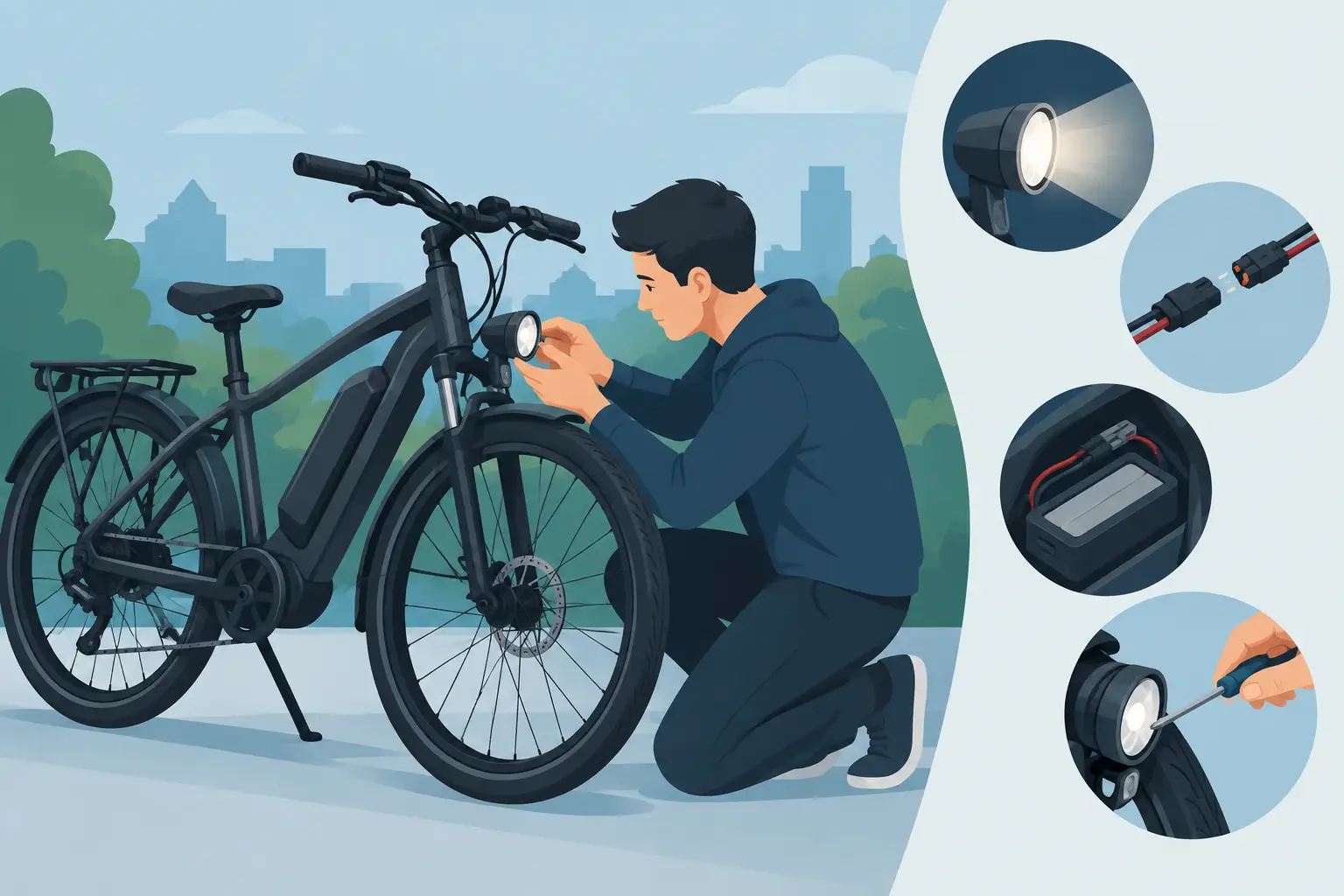
A headlight that suddenly goes dark on an evening ride is more than an inconvenience. An ebike lighting failure can leave you less visible to drivers, shorten your safe riding window, and sometimes point to a larger electrical problem. The good news is that many lighting faults have a clear cause once the system is tested in the right order.
On most e-bikes, the lights are tied into the main battery, controller, display, wiring harness, or a separate small battery. That means a failed light is not always a failed light. A loose connector, corroded wire, damaged controller output, or a setting in the display can all produce the same symptom.
How an Ebike Lighting System Works
Factory-installed lights commonly receive low-voltage DC power from the bike’s main battery through the controller. The display or handlebar control tells the controller to activate the lighting circuit. Some systems use a dedicated light output wire, while others integrate lighting through a communication harness.
Aftermarket lights may work differently. They may run from a separate rechargeable battery, connect directly to the main battery through a voltage reducer, or be wired into an accessory port. Knowing which style is on your bike matters. A loose rechargeable light is a simple accessory issue. A factory light that will not turn on may require electrical diagnosis.
The front and rear lights can also behave differently. On some e-bikes, the rear light only activates with the headlight. On others, it doubles as a brake light and may have separate power and signal wires. If one light works and the other does not, that detail helps narrow down the fault.
Common Causes of Ebike Lighting Failure
A failed light unit or bulb
LED lights last much longer than traditional bulbs, but they can still fail. Water intrusion, heat, vibration, and impact can damage the circuit board inside a sealed light housing. If the light receives proper voltage and ground but does not illuminate, replacement is usually the practical repair.
A cracked lens or loose mounting bracket is not just cosmetic. Movement can stress the wire where it enters the housing, eventually breaking a conductor inside the insulation.
Loose, damaged, or corroded connectors
Connectors are one of the first places we inspect. Many e-bikes have small waterproof plugs near the fork, head tube, rear rack, controller box, or battery tray. A connector may look plugged in while one pin is bent, pushed back, wet, or corroded.
San Diego riders also see connector issues after beach-area rides, wet storage, bike washing, or seasonal rain. Salt air and moisture can work their way into a connector over time. Never force a plug together if it is misaligned. Bent pins can turn a minor connection problem into a harness repair.
Broken wiring near moving parts
The wire leading to the front light often flexes where the fork turns. Rear-light wires can be pinched beneath a rack, fender, seat, or frame cover. On fat-tire and moped-style bikes, wiring may run through tight areas near suspension components or the controller compartment.
A broken wire may cause an intermittent problem first. The light might work when the handlebars are straight but cut out during a turn, or come back after riding over a bump. That pattern strongly suggests a wiring or connector fault rather than a dead LED.
Display settings or a failed light switch
Some displays require a long press on a button to activate the lights. Others have a lighting menu that can be disabled after a reset or battery replacement. Before assuming there is a hardware failure, check the display for a headlight icon and confirm the bike is powered fully on.
If the display indicates that lights are on but neither light receives power, the issue may be the controller output or harness. If the icon does not respond to the button, the switch, display keypad, or display communication circuit may be at fault.
Controller light-output failure
The controller manages motor power, battery input, and often accessory output. A shorted light, incorrect aftermarket wiring, or water damage can damage the controller’s lighting circuit while leaving the bike able to ride normally.
This is where diagnosis matters. Replacing a headlight without checking output voltage can waste money. If the controller is not sending power, a new light will not solve the problem. On some models, the controller can be repaired or replaced. On others, the fault may be in an external DC converter instead.
Battery, fuse, or voltage-converter problems
A main battery can have enough power to turn on the display yet still develop voltage drop under load. This is more common with aging batteries, poor battery connections, damaged discharge ports, or internal battery-management-system issues. Lights may flicker alongside display resets or motor cutouts when that happens.
Some e-bikes use a fuse or separate DC-DC converter to reduce pack voltage for lights and accessories. A failed converter can remove lighting while the motor still operates. A blown fuse may be a symptom of a short circuit, so replacing it without finding the underlying cause is risky.
Safe Checks You Can Do Before Scheduling Repair
Start with the simple checks, but avoid probing unknown wires or opening a battery pack. E-bike batteries can carry enough energy to damage components, melt wiring, or cause injury if shorted.
First, charge the battery and make sure it is fully seated and locked in place. Turn the e-bike on, use the correct display command to enable lighting, and look for the headlight indicator. Check whether the display, motor assist, taillight, and brake light are functioning normally. Those observations provide useful diagnostic clues.
With the bike powered off and battery removed if accessible, inspect visible wiring. Look for pinched insulation, sharp bends, exposed copper, cracked light housings, loose mounting hardware, and connectors that are partly separated. If a connector is designed to disconnect, inspect it for moisture or debris, then reconnect it gently and align the markings.
Do not use household voltage on an e-bike light, bypass fuses with wire or foil, or connect a light directly to the main battery unless its voltage rating is confirmed. A 48-volt battery can instantly destroy a 12-volt light. Likewise, do not cut into a factory harness just to test a replacement accessory. That can create water-entry points and complicate future repairs.
When Flickering Lights Mean a Bigger Electrical Issue
A light that is simply dead may be isolated to the lamp or its wire. Flickering, dimming with throttle use, or lights that cycle on and off with the display deserve closer attention.
Watch for related symptoms: motor hesitation, random shutoffs, error codes, battery percentage dropping suddenly, a hot connector, or a display that restarts over bumps. Those can indicate a poor main power connection, voltage drop, controller problem, damaged harness, or battery issue. Lighting is often the first circuit to show an unstable electrical supply because it draws a steady load and responds quickly to voltage changes.
If you smell burning insulation, find melted plastic, see a swollen battery, or notice a connector getting hot, stop riding and do not charge the bike. Disconnect the battery only if it can be removed safely without touching damaged wiring. Those symptoms call for prompt professional inspection.
Professional Diagnosis for Ebike Lighting Failure
A proper lighting diagnosis is more than swapping parts. The technician confirms battery voltage, checks the controller’s accessory output, tests continuity through the harness, inspects grounds, and verifies whether the light itself operates at its rated voltage. On integrated systems, the display command and controller response may also need to be checked.
That process separates a bad headlight from a failed controller output, broken wire, converter fault, or communication issue. It also prevents an aftermarket replacement from overloading a circuit that was designed for a lower-current factory light.
At FixEbike, we diagnose the electrical path before recommending repairs, whether the issue is a commuter bike headlight, a rear brake light on a moped-style e-bike, or intermittent lighting on a trail bike. For riders in San Diego and nearby communities, that means less guesswork and a clearer answer about what actually failed.
Reliable lights are part of a safe, usable e-bike, especially for early commutes, school runs, and rides that run later than planned. If basic checks do not restore your lights, have the circuit tested before the next ride rather than relying on visibility that may disappear when you need it most.