
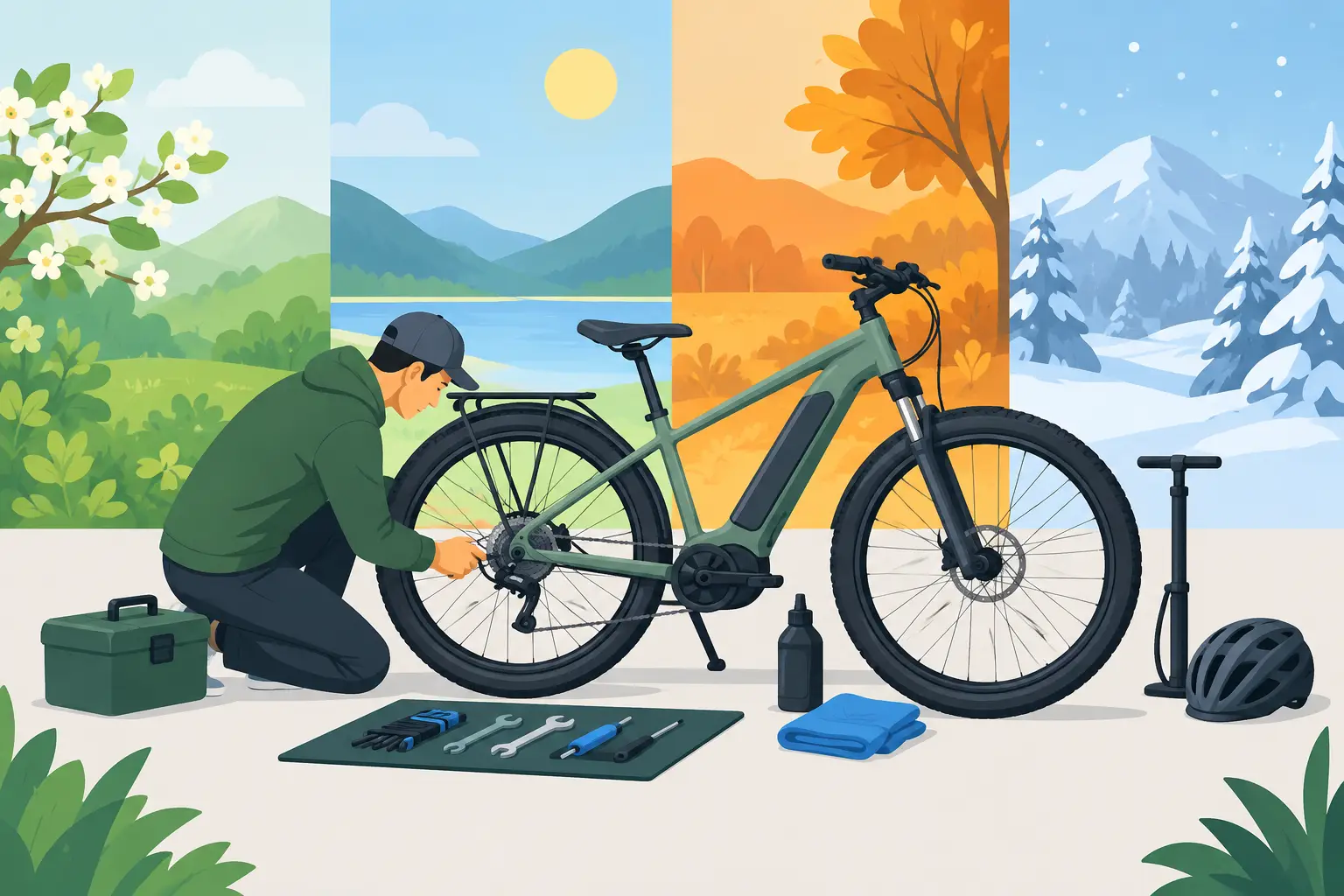
A battery that charged normally last month, a brake that suddenly squeals, or a motor that cuts out on a hill often starts with a small seasonal issue that went unnoticed. Essential ebike seasonal maintenance tasks help San Diego riders catch those problems before they become a no-start condition, a stranded commute, or an expensive component replacement.
San Diego does not have a harsh winter by most standards, but e-bikes still face real seasonal stress. Summer heat affects battery life and tire pressure. Coastal moisture and occasional rain can work into connectors and brake hardware. Dust, trail grit, and daily miles wear down drivetrains, tires, and bearings year-round. The right maintenance schedule depends on how and where you ride, but a few focused checks each season keep the electrical and mechanical systems working together reliably.
Essential Ebike Seasonal Maintenance Tasks by Season
A seasonal inspection is more useful than waiting for a warning code or a complete failure. It gives you a baseline: how far the battery goes, how the motor sounds, how the brakes feel, and whether cables and connectors are still secure. If something changes, you have a better chance of identifying it early.
Spring: Clean off grit and check the basics
Spring is a good reset point after rainy rides, storage, or a period of lighter use. Start by washing the bike carefully with a damp cloth and low-pressure water. Do not spray a hose directly into the motor, battery mount, display, controller area, or wiring connections. High-pressure water can force moisture past seals that are designed for road spray, not direct pressure.
Once the bike is clean and dry, inspect the frame, fork, rack, fenders, and battery cradle for loose hardware or cracks. Pay close attention to the battery mounting rails and latch. A battery that shifts, rattles, or requires force to lock in needs attention. Poor battery contact can cause intermittent power loss that feels like a motor or controller problem.
Check tire tread, sidewalls, and pressure before returning to longer rides. Tires slowly lose air during storage, and low pressure makes punctures, rim damage, and sluggish handling more likely. For fat-tire e-bikes, the correct pressure varies widely based on rider weight, tire size, terrain, and cargo. Use the tire sidewall as a safe range, then adjust within that range for the ride you are doing.
Spring is also the right time to examine brake pads and rotors. E-bikes carry more weight and reach higher average speeds than standard bicycles, so brake wear is not a minor detail. If the lever pulls close to the handlebar, braking feels weak, or pads are visibly thin, schedule service before relying on the bike for a commute or family ride.
Summer: Protect the battery from heat
Heat is the biggest seasonal concern for many San Diego e-bike owners. Lithium-ion batteries work best within a moderate temperature range. Leaving a bike or removable battery inside a hot car, garage, or direct afternoon sun can accelerate battery aging and may trigger charging or power limitations.
Park in shade when possible and bring a removable battery indoors rather than leaving it on the bike. If the battery is hot from a long ride, let it cool before charging. Charging a hot battery is harder on the cells, and charging immediately after a fast ride can add unnecessary thermal stress.
Summer also calls for more frequent tire checks. Hot pavement and higher temperatures raise tire pressure, while thorny trails and dry-road debris increase the chance of flats. Check pressure at least weekly if you ride often, and inspect the tire surface for embedded glass, thorns, or cuts.
Listen to the drivetrain during dry, dusty months. A chain that is black, gritty, or squeaking is wearing faster than it should. Clean and lubricate it with a bicycle-specific product, then wipe off excess lubricant. Too much lube attracts more grit. Riders with mid-drive e-bikes should be especially consistent here because the motor adds load through the chain, cassette, and chainring.
Fall: Inspect connections before wet weather
Fall is the time to look closely at electrical connections, especially if the bike has been ridden near the coast, through puddles, or on dusty trails. Check visible wiring for rub marks, crushed sections, loose zip ties, and damaged insulation. Look at connectors near the handlebars, motor, battery tray, and controller for corrosion, bent pins, or a connection that is not fully seated.
Do not pull apart sealed connectors just to inspect them if the system is working normally. Reconnecting plugs incorrectly can create new problems. But if you see green corrosion, moisture, heat discoloration, or a damaged connector housing, stop riding until the issue is assessed. Electrical resistance at a weak connection can lead to voltage drop, controller faults, or heat damage under load.
Test the lights, display, throttle if equipped, pedal assist, brake cutoffs, and horn or turn signals if your bike has them. These systems often share wiring paths or controller inputs. A brake cutoff sensor that sticks, for example, can make a healthy motor appear dead because the controller believes the brakes are engaged.
For riders who use their bikes for school, delivery work, or daily commuting, fall is also a practical time for a full brake adjustment and wheel check. Spokes can loosen gradually, especially on heavier hub-motor wheels. A wobble, clicking spoke, or changing brake rub should not be ignored.
Winter: Manage rain, storage, and infrequent use
San Diego winter rides are often more about rain and cooler mornings than freezing temperatures. After a wet ride, dry the bike before putting it away. Wipe down the frame, chain, brake rotors, and exposed hardware. Then store the bike in a dry space with the battery removed if practical.
Never put a wet battery on the charger. Inspect the charge port and battery terminals first, and allow everything to dry fully. If a charger light behaves differently than usual, the battery will not accept a charge, or the display shows a low-voltage or communication error, do not keep cycling the charger in hopes that it will recover. Those symptoms can come from the charger, battery management system, battery terminals, wiring, or controller circuit.
For a bike that will sit for several weeks, avoid storing the battery completely full or completely empty. A partial charge is generally healthier for long-term storage. Check it periodically and recharge only as needed. The exact target can vary by battery design and manufacturer guidance, so follow the battery manual when it provides specific storage instructions.
Seasonal Checks That Need a Technician
Owners can handle cleaning, tire pressure, basic chain care, and visual inspections. Complex electrical issues are different. A multimeter reading alone does not always identify the failed part because e-bike systems can have a battery voltage issue, a battery management system restriction, a damaged hall sensor, a controller fault, phase-wire damage, or a communication problem between components.
Have the bike diagnosed if it loses power only under acceleration, shuts off over bumps, shows intermittent error codes, makes a grinding or clicking motor sound, or has a battery percentage that drops unusually fast. The same applies when the display turns on but pedal assist and throttle do not respond. Replacing parts without confirming the fault can turn one repair into several unnecessary purchases.
Brake problems also deserve prompt service when they involve hydraulic leaks, contaminated pads, warped rotors, persistent rubbing, or weak stopping power. On a heavy e-bike, reliable braking is a safety item, not a comfort upgrade.
Build Maintenance Around Your Actual Riding
A rider doing short weekend trips on a paved bike path needs a different schedule than someone commuting five days a week, carrying a child seat, climbing hills, or riding a fat-tire e-bike on dirt. Higher mileage means more frequent chain, brake, tire, and wheel inspections. Trail use means more cleaning and closer attention to suspension, bearings, and electrical connectors. Coastal riding means watching for corrosion.
Keep a simple record of tire changes, brake pad replacements, charging concerns, and any error codes. A photo of a display error and a note about when it occurred can make diagnosis much faster. If your e-bike starts behaving differently, do not wait for a complete breakdown. A focused inspection at FixEbike can identify whether the issue is routine wear or a developing battery, motor, wiring, or controller fault – and help keep your next ride on schedule.