
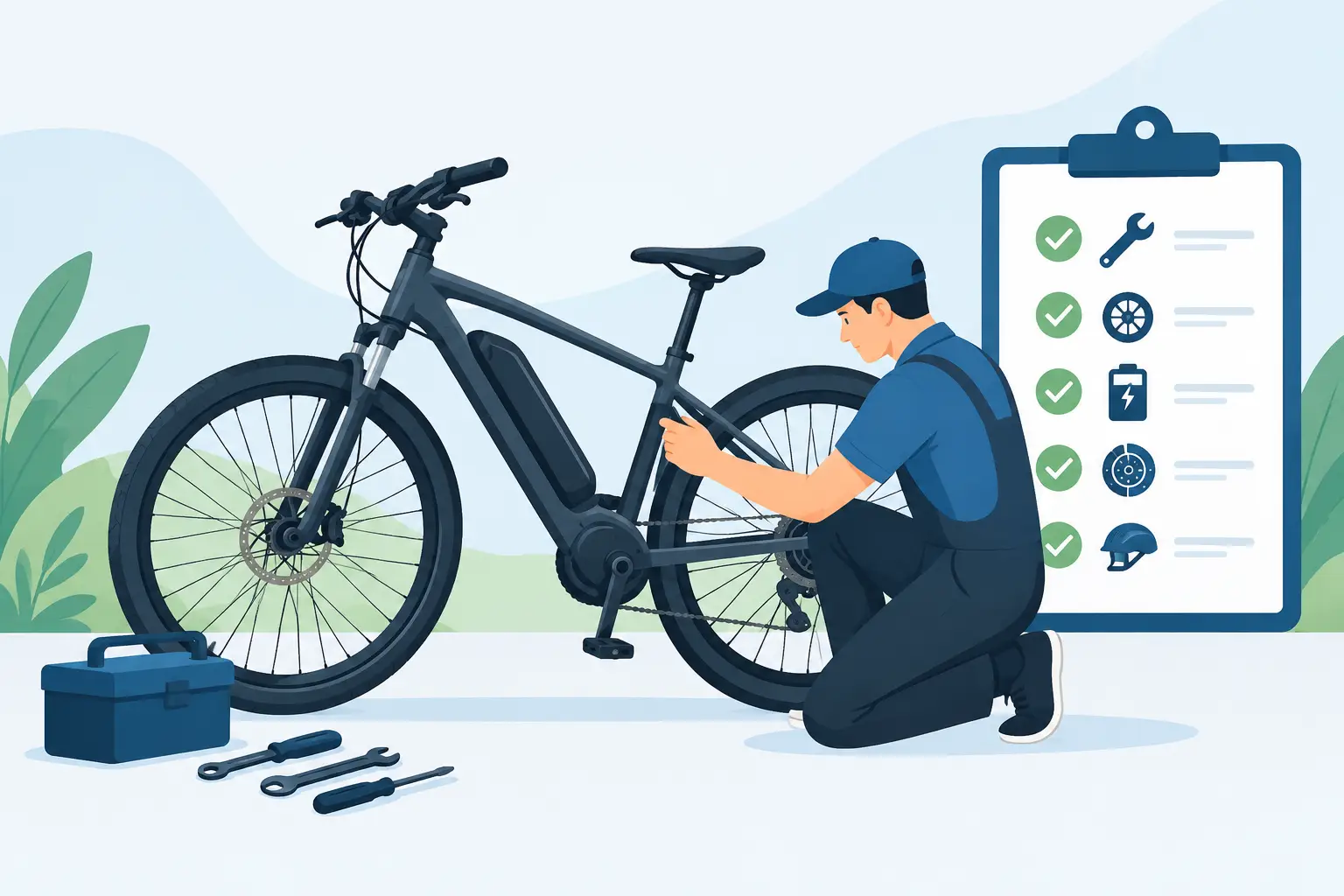
A reliable e-bike should feel predictable: the battery charges normally, assist comes on cleanly, brakes stop with confidence, and nothing rattles or cuts out when the road gets rough. This best electric bike service checklist helps San Diego riders catch small problems before they become a no-start, a stranded commute, or an expensive component failure.
E-bikes need the same mechanical attention as regular bikes, but the electrical system adds a second layer. A loose connector, damaged cable, weak battery connection, or overheating controller can look like a motor problem when it is not. The goal is not to take every component apart at home. It is to inspect what you can safely see, track changes in performance, and bring in a technician when the symptoms point beyond basic maintenance.
Best Electric Bike Service Checklist: Before Every Ride
Start with a quick walk-around. It takes less than two minutes and is especially worthwhile for commuters, delivery riders, parents checking a child’s bike, and anyone riding a heavy fat-tire or moped-style e-bike.
Check that both wheels are secure and that the tires are properly inflated. Low pressure makes an e-bike feel sluggish, reduces range, and increases the chance of a pinch flat. The right pressure depends on the tire and riding surface. A commuter tire generally runs firmer than a wide off-road tire, so use the pressure range printed on the tire sidewall as your starting point.
Squeeze both brake levers before rolling out. The levers should feel firm, not pull all the way to the grip. Look for a brake pad rubbing constantly, a rotor that wobbles, or a brake that makes grinding noise. On many e-bikes, brake sensors also tell the motor to stop assisting. If a brake sensor sticks or a lever does not return fully, the bike may show reduced power or no motor response.
Turn the display on and confirm the battery level, assist setting, lights, and any warning icons. If the display turns off over bumps, flickers, or resets when you apply power, note exactly when it happens. That detail helps narrow the issue to a battery mount connection, ignition circuit, display cable, controller, or wiring harness.
Finally, look over the main cables. Pay close attention to areas near the handlebars, folding joints, rear axle, battery cradle, and frame entry points. A pinched, stretched, or rubbed-through wire should be addressed before it becomes an intermittent electrical fault.
Weekly Checks for Brakes, Drivetrain, and Fasteners
A weekly check makes sense for frequent riders. If the bike sits most of the time, perform these checks before longer rides instead.
Clean off heavy dirt and wipe the chain, cassette, and chainring. Then apply a bicycle-specific chain lubricant lightly and wipe away the excess. A dry or dirty chain wears faster and can make shifting rough. On mid-drive e-bikes, drivetrain wear matters even more because motor torque travels through the chain and gears.
Inspect brake pads through the caliper opening if possible. Pads should have usable friction material left, not just a thin dark backing plate. Squealing can come from contamination, moisture, glazed pads, or a misaligned caliper. Grinding usually means service should not wait, because metal-on-metal braking can damage the rotor quickly.
Check for loose hardware on racks, fenders, kickstands, stems, handlebars, crank arms, pedals, and axle nuts. Do not guess at torque on critical parts. Over-tightening can strip threads or crack components, while under-tightening can be dangerous. If you do not have the correct torque information and tools, have the bike inspected.
Also pay attention to shifting. Skipping under load, a chain that jumps off gears, or a derailleur that is bent after a tip-over can become more than an annoyance. Back off pedaling pressure while shifting, particularly on a mid-drive bike, and avoid shifting when climbing hard under full motor assistance.
Monthly E-Bike Electrical Inspection
The electrical inspection is where a standard bike checklist stops and e-bike-specific service begins. Start with the battery removed and the system powered off.
Look at the battery case for cracks, swelling, water intrusion, damaged terminals, or a latch that no longer holds the pack securely. The battery should sit firmly in its mount without excessive movement. Never use a swollen, leaking, severely damaged, or unusually hot battery. Do not try to open a battery pack or bypass its battery management system. Those repairs require proper testing procedures and equipment.
Inspect battery contacts for dirt, discoloration, corrosion, or signs of heat. Darkened terminals, melted plastic, or a burnt smell can indicate high resistance at the connection. Continued riding in that condition can create voltage drop under load, intermittent shutdowns, and additional damage to the battery mount or wiring.
Check the charger and charging port as well. Make sure the charger cord is not cut or sharply bent and that the port is clean and secure. Use the charger specified for the bike whenever possible. A charger with the wrong voltage or connector may not simply charge slowly – it can damage the battery or create a safety risk.
With the bike powered on, test the display controls, throttle if equipped, pedal assist response, headlight, taillight, and brake cutoff function. Listen for odd motor noise and notice whether assistance is smooth. A hub motor that suddenly growls, pulses, jerks, or loses power on hills may have a controller, hall sensor, phase-wire, or internal motor issue. A professional diagnostic should test the system rather than replacing parts based on a guess.
Service Items Every 500 to 1,000 Miles
Mileage is useful, but riding conditions matter. Sand, steep grades, coastal moisture, heavy loads, and daily stop-and-go riding can shorten service intervals. A bike used for a short flat weekend ride will not wear like one used every day from Mira Mesa to work or school.
At roughly 500 to 1,000 miles, plan for a more complete inspection of brake pads, rotors, tire condition, wheel trueness, chain wear, bearings, and drivetrain adjustment. Tire tread is only part of the picture. Replace a tire with sidewall cracking, repeated punctures, exposed casing, a bulge, or a worn center section that no longer grips reliably.
Brake fluid on hydraulic systems may need service over time, depending on brake type and use. Spongy levers, fluid leaks, or inconsistent braking need prompt attention. Mechanical disc brakes also need periodic cable adjustment as pads wear.
This is a good interval for a technician to inspect motor cable routing, controller connections, battery mount condition, and the charging system. FixEbike can diagnose difficult power and communication faults that may not show up during a basic mechanical tune-up, including unexplained voltage drops, controller errors, and intermittent motor cutouts.
Symptoms That Need Professional Diagnosis
Some issues are clear signs to stop troubleshooting and have the bike checked. A battery that will not charge, shuts down under acceleration, or loses range abruptly needs more than a visual inspection. Range naturally changes with hills, rider weight, tire pressure, wind, temperature, and assist level. But a sudden major change without an obvious reason may point to battery health, a poor connection, charger trouble, or excessive electrical load.
Motor faults deserve the same caution. Do not keep forcing the bike to run if it has a burning smell, repeated error code, grinding noise, severe vibration, or a motor cable that gets hot. A loose axle or damaged torque arm on a hub-drive e-bike can also become a serious safety issue.
Water-related problems can appear hours or days after a wet ride or wash. If the display, lights, throttle, or assist acts unpredictably after moisture exposure, let the bike dry, avoid charging it, and have the electrical system inspected. Avoid pressure washing around displays, controllers, battery mounts, motors, and cable connections.
Keep a Simple Service Record
Write down the date, mileage, tire pressure, brake work, chain replacement, error codes, and any changes in range or performance. This record makes it easier to spot a pattern. For example, a shutdown that only happens below half charge, on steep hills, or after hitting bumps gives a technician valuable diagnostic direction.
The best maintenance habit is paying attention before a ride becomes a repair emergency. If your e-bike starts feeling different, trust that change and get it checked while the problem is still small enough to solve cleanly.