
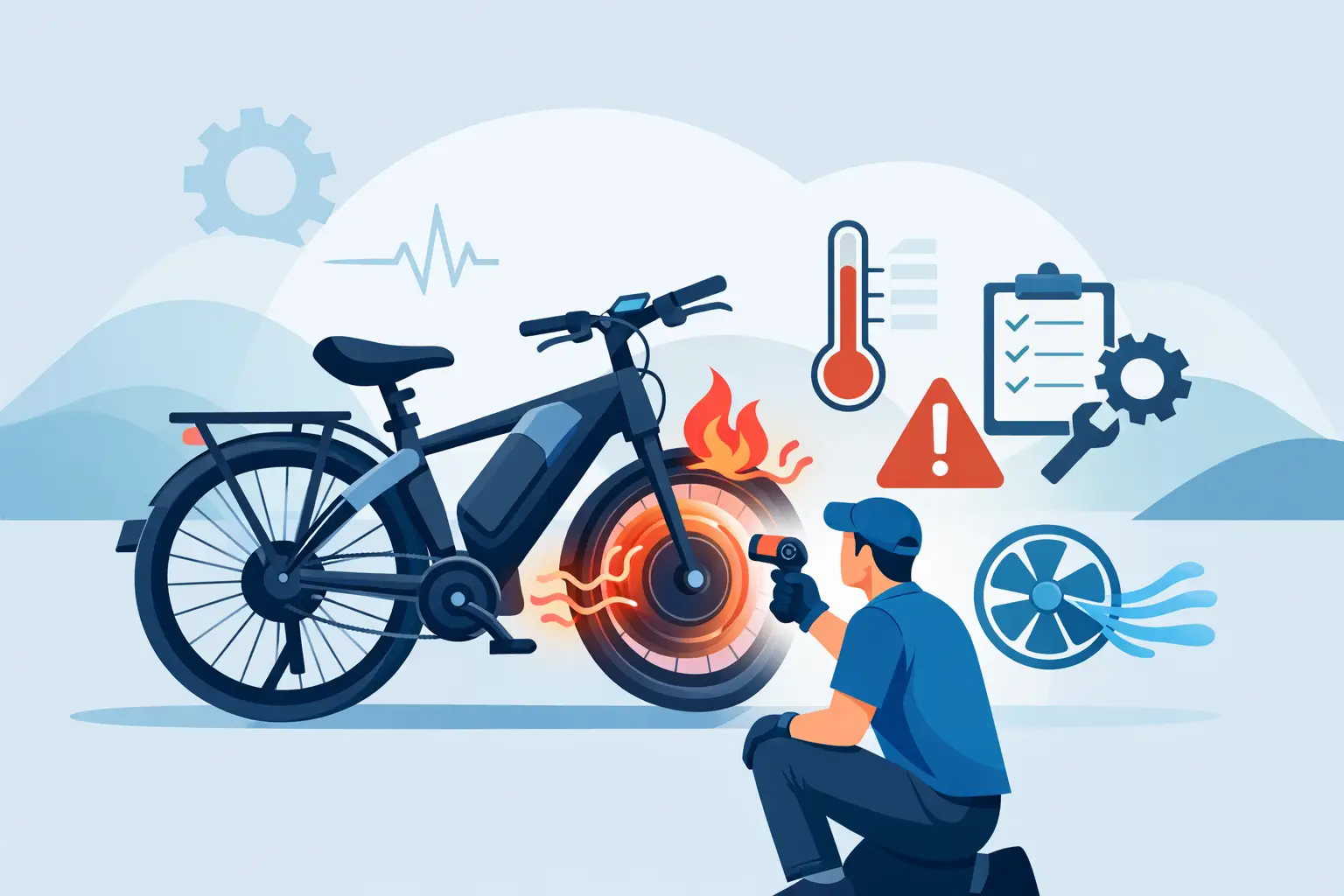
A motor that is hot after a steep climb is not automatically failing. A motor that smells burnt, loses power, cuts out, or becomes too hot to touch after a short flat ride needs attention. Knowing how to diagnose ebike motor overheating helps you avoid turning a repairable wiring, brake, or controller issue into a damaged motor.
For San Diego riders, overheating often shows up on long grades, hot afternoon commutes, loaded cargo rides, or repeated stop-and-go use. The key is separating normal operating heat from heat caused by excess electrical resistance, mechanical drag, or a motor being asked to do more work than it was designed to handle.
What Ebike Motor Overheating Looks Like
Most ebike motors get warm under load. Hub motors are enclosed, so they do not shed heat as quickly as an exposed mid-drive system. Warm is normal. Excessive heat is not.
Pay attention to the pattern, not just the temperature. If the motor is only very warm after a long hill, then cools normally and continues to perform well, the bike may simply be working near its limit. If it becomes extremely hot during ordinary riding, the cause needs to be diagnosed.
Common warning signs include:
- Reduced power after several minutes of riding
- A motor that cuts out and works again after cooling down
- A hot electrical or burnt varnish smell near the hub or controller
- Grinding, rubbing, clicking, or roughness from the motor wheel
- Melted connector housings, discolored wires, or warm plugs
- An error code on the display or a sudden loss of pedal assist
A motor temperature sensor, if your system has one, can trigger thermal protection before permanent damage occurs. Not every ebike has this feature. On bikes without thermal protection, continued riding can overheat phase windings, damage hall sensors, weaken solder joints, or melt insulation inside the motor.
Start With a Safe Temperature Check
Stop riding if you smell burning, see smoke, hear unusual electrical buzzing, or feel a major loss of power. Turn the bike off, remove the battery if it is safe to do so, and let the system cool in an open, dry area. Do not spray water on a hot motor or battery.
After a normal ride, carefully place the back of your hand near the motor housing without touching it right away. If you cannot comfortably touch the housing for more than a second or two, it is likely hotter than it should be. An infrared thermometer gives a better surface reading, but remember that the outside of a hub motor is cooler than the windings inside.
Surface temperature alone does not tell the whole story. A motor may be hot because it has been climbing a steep grade with a heavy rider, low battery, and high assist setting. The more useful question is whether the heat matches the workload. A motor that overheats on flat ground at moderate speed points to a fault or a mechanical problem.
Check for Mechanical Drag First
Before testing electrical components, make sure the bike rolls freely. Mechanical drag makes the motor work harder, pulling more current and generating excess heat.
With the battery off, lift the drive wheel and spin it by hand. It should rotate smoothly. A direct-drive hub motor will have some magnetic resistance, known as cogging, but it should not feel like the wheel is binding. A geared hub motor should spin relatively freely when it is not powered.
Check whether the brake rotor rubs the brake pads. A slightly misaligned caliper, stuck piston, or overtightened mechanical brake can create enough drag to overwork the motor, especially on a heavy fat-tire or moped-style ebike. Also inspect tire pressure, wheel alignment, and wheel bearings. A loose, rough, or seized bearing can make the motor housing hot and may be mistaken for an electrical failure.
If the bike has a rear hub motor, verify that the axle hardware is secure and that the axle is properly seated in the dropouts. A shifting axle can strain the motor cable and create intermittent electrical problems.
Inspect the Motor Cable and Connectors
The motor cable is one of the first places a technician looks when diagnosing ebike motor overheating. The cable often exits the hub axle at a low point, where it can be pulled, pinched, bent sharply, or damaged by a crash.
With the battery removed, inspect the full cable run from the motor to the controller. Look for crushed insulation, exposed copper, tight zip ties, water intrusion, or a section that becomes unusually warm after riding. Check the main motor connector as well. Disconnect it only if the design allows it, then look for bent pins, green corrosion, blackened terminals, or melted plastic.
High-resistance connections are a common source of heat. When a phase-wire connector is loose or corroded, current has to force its way through a poor connection. That resistance creates heat at the plug and can reduce motor power. Continuing to ride can damage the connector, controller, and motor wiring.
Do not force mismatched connectors together or guess at wire colors. Phase and hall wire color codes vary between brands, and an incorrect connection can cause harsh motor operation, overheating, or immediate controller damage.
Consider Battery Voltage and Controller Load
A weak battery can contribute to motor overheating even when the motor itself is healthy. As battery charge gets low, voltage drops under load. The controller may draw higher current to maintain power demand, which increases heat in the controller, wiring, and motor.
Notice whether the issue happens mainly below half charge, during hard acceleration, or on hills. A display that drops several battery bars under throttle and then recovers on flat ground may indicate voltage sag. The root cause could be an aging battery, a weak cell group, damaged battery terminals, a BMS limitation, or undersized wiring.
The controller also matters. An aftermarket controller with a higher current limit can push a stock motor beyond its thermal capacity. This is especially common when a bike has been modified for more speed or stronger acceleration. More power can be useful, but it creates more heat. The correct setup depends on the motor type, battery voltage, rider weight, terrain, wheel size, and how the bike is used.
A controller fault can also send uneven current through the motor. Symptoms may include rough starts, shuddering under throttle, reduced top speed, or a motor that sounds strained. These issues require proper testing of phase wiring, hall sensors, controller outputs, and system communication. Replacing parts based on a guess can get expensive quickly.
Test the Riding Conditions Before Blaming the Motor
A small hub motor can overheat without having an electrical defect. Long, slow climbs are especially hard on hub motors because cooling airflow is low while torque demand is high. Starting repeatedly on a steep hill, carrying a passenger or cargo, riding underinflated fat tires, and using full throttle at low speed all add heat.
Try a controlled comparison ride after the bike has cooled. Use a moderate assist level, keep tire pressure correct, and choose flatter terrain. If the motor stays at a reasonable temperature and performs normally, the problem may be workload-related. On steep climbs, helping with the pedals and maintaining momentum reduces the current demand that produces heat.
If the motor still overheats quickly on level ground, do not continue testing with repeated high-power rides. That points more strongly to brake drag, bearing damage, a wiring fault, controller trouble, or an internal motor issue.
When an Ebike Motor Needs Professional Diagnosis
Bring the bike in if the motor cuts out from heat, the wheel has grinding or resistance, a connector has melted, or there is a burnt smell. Those are not symptoms to monitor for another week. They can lead to more costly damage if the bike remains in service.
A proper diagnostic process includes checking brake drag and wheel condition, measuring battery voltage behavior under load, inspecting phase and hall wiring, testing connectors for resistance and heat damage, and evaluating controller operation. On some systems, technicians can also inspect internal motor components such as hall sensors, gears, bearings, windings, and axle cable damage.
At FixEbike, the goal is to identify the actual source of the heat before recommending a motor, battery, controller, or wiring repair. Sometimes the answer is a simple brake adjustment or connector repair. Other times, the evidence points to a failing controller or internal hub motor fault.
Treat overheating as useful information from the bike. A clear pattern of when it happens, how quickly it gets hot, and what the bike feels like under load gives a technician a much faster path to the right repair.