
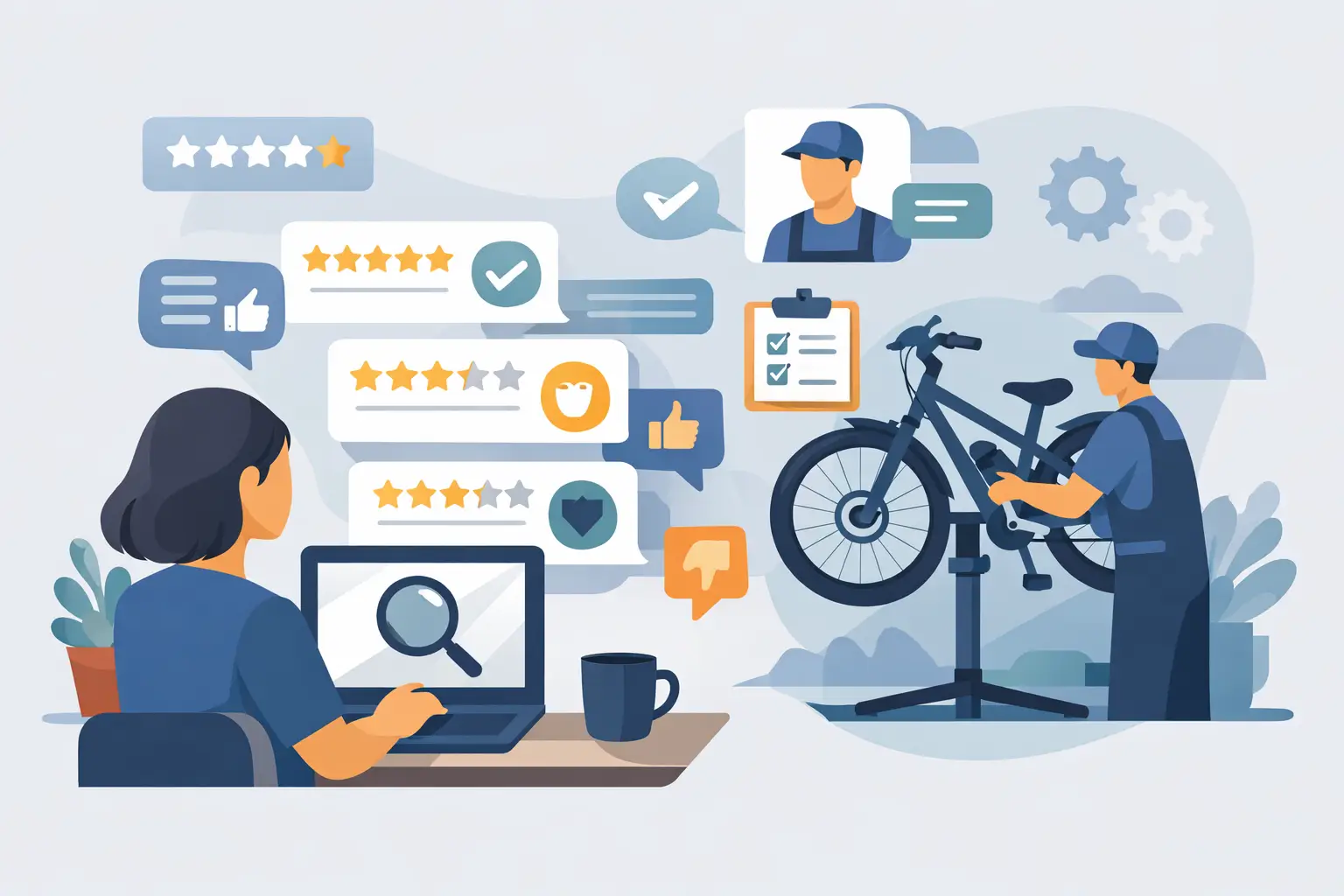
A five-star rating is helpful, but ebike repair reviews tell you much more when you know what to look for. For a rider dealing with a battery that will not charge, a motor that cuts out under load, or an error code that keeps returning, the real question is not whether a shop is friendly. It is whether the technician found and fixed the actual fault.
That distinction matters with electric bikes. A traditional bike shop may handle a flat tire, brake adjustment, or chain replacement well, but electrical and powertrain problems require another level of diagnosis. Before you book a repair in San Diego, read reviews for evidence that the shop understands the system behind the symptom.
What Strong Ebike Repair Reviews Actually Say
The most useful reviews are specific. They mention the original problem, what the shop checked, the repair performed, and how the bike worked afterward. A comment such as, “They fixed my e-bike quickly,” is positive, but it does not tell you whether the issue was a loose connector or a failed controller.
Look for details like battery diagnostics, BMS faults, hub motor repair, controller replacement, damaged wiring, display communication errors, brake service, or intermittent power loss. When customers can explain the problem in plain language and the repair still sounds technically credible, that is a good sign.
For example, “My bike powered on but lost assist on hills. The shop traced it to a motor wiring issue and tested it before pickup” says far more than a general compliment. It suggests the technician did not simply replace parts until the bike appeared to work.
Reviews should also show that the shop can separate related problems. A bike that will not turn on could have a drained battery, a failed charger, a blown fuse, a damaged battery mount connection, a controller issue, or broken wiring. Those repairs have very different costs and timelines. A diagnostic-first shop should identify the cause before recommending a major component replacement.
Read for Diagnostic Skill, Not Just Fast Service
Fast turnaround matters, especially if your e-bike is your commute, your delivery vehicle, or your child’s daily ride. Still, speed without diagnosis can create repeat visits. A shop may get the bike moving again by tightening a connection, only for the underlying voltage drop or corrosion problem to return a week later.
The best reviews often describe clear communication during the diagnostic process. Customers may mention that the technician explained what was tested, called before doing additional work, or provided options based on repair cost and part availability. That is particularly valuable for older bikes, direct-to-consumer brands, modified bikes, and models with hard-to-source components.
Electrical troubleshooting is not always instant. Intermittent failures can require checking connectors, load-testing the battery, examining phase and hall sensor wiring, confirming controller output, and testing communication between the display, controller, and battery. A review that appreciates careful troubleshooting is often more meaningful than one that only praises same-day service.
At the same time, diagnostics should not become vague or open-ended. Look for customers who describe receiving an estimate, an explanation of the findings, and approval before larger repairs moved forward. Honest repair service means being clear when a repair is worthwhile and when replacement may make more financial sense.
Specific Problems That Build Confidence
When reading reviews, pay extra attention to problems similar to yours. If your rear hub motor makes a grinding sound, reviews about flat repairs will not tell you much. If your charger shows green immediately but the battery never gains range, look for feedback involving charging ports, battery health, charger testing, or battery management system issues.
Good signs include reviews from riders with fat-tire bikes, commuter e-bikes, moped-style models, cargo bikes, and scooters. These vehicles vary in design, but they commonly share the same types of electrical faults: loose battery terminals, damaged cable harnesses, water intrusion, worn brake sensors, controller failures, and motor-related errors.
A shop does not need to claim every repair is easy. In fact, reviews that mention realistic limits can be reassuring. Some proprietary batteries cannot be rebuilt safely. Some controllers are unavailable. Severe corrosion or crash damage may make repair less practical. Technical honesty is better than a promise that every bike can be fixed at any price.
Pay Attention to Communication and Estimates
A repair experience is not only about the final invoice. It is also about whether you understood what was happening to your bike. Reviews should indicate that the shop communicated in a direct, respectful way, particularly when a repair uncovered more than the original complaint.
A fair estimate does not always mean the lowest price. A low quote that skips proper testing can become expensive if the wrong part is replaced. A better repair estimate accounts for diagnostic time, labor, parts, and the chance that a component-level issue needs further inspection. The shop should be able to explain those categories without burying you in technical jargon.
For parents maintaining an e-bike for a teenager, this clarity is especially important. A bike with weak brakes, a damaged tire, or an unpredictable throttle is not a problem to postpone. Reviews that mention safety checks, brake adjustments, tire replacement, and a clear pickup explanation are worth noting.
You should also look for signs that a shop respects the rider’s time. Did customers hear back after dropping off their bike? Were parts delays explained? Did the repair center call when the diagnostic findings were ready? A busy local shop may not always offer immediate turnaround, but it should not leave you guessing.
Watch for Patterns, Not One Perfect Comment
Every local business can receive an occasional short or overly emotional review. One complaint alone does not tell the full story. Read several recent reviews and look for a pattern.
If riders repeatedly mention accurate diagnosis, fair pricing, friendly explanations, and bikes that stayed repaired, that pattern carries weight. If multiple reviews mention unexpected charges, poor communication, or the same problem returning, take that seriously as well.
Recent reviews matter more than old ones because staff, parts access, and service processes can change. A repair center that consistently works on current electrical systems and keeps customers informed is more likely to handle modern e-bike issues effectively.
Be cautious with reviews that are all generic and nearly identical. Genuine customer feedback usually varies. One rider might be relieved that a controller issue was found. Another may appreciate a quick tire and brake service before a weekend ride. A commuter may focus on getting dependable range back. Different stories, with consistent service quality underneath them, are more believable than repeated slogans.
Questions Reviews May Not Answer
Even detailed reviews cannot tell you everything. Before bringing in your e-bike, make sure the shop services your bike type and is prepared to assess the specific problem. Ask whether there is a diagnostic fee, whether that fee applies toward repair, and whether the shop can work on your battery, motor, or brand.
It also helps to describe the symptoms accurately. Note when the problem happens, whether an error code appears, how long the battery lasts, and whether the issue started after rain, a crash, storage, or a recent modification. Bring the charger and battery key if they are relevant to the fault. Better information at check-in helps the technician test the right system faster.
At FixEbike, the focus is on identifying the reason an e-bike failed, not just treating the most visible symptom. That approach is especially useful when a motor, controller, battery, display, and wiring harness all need to work together for the bike to run safely.
A review can help you narrow your options, but your own repair experience should begin with a clear conversation. Choose a shop whose feedback shows technical depth, honest estimates, and follow-through. When the technician can explain what failed and why, you are much closer to getting back on the road with confidence.