
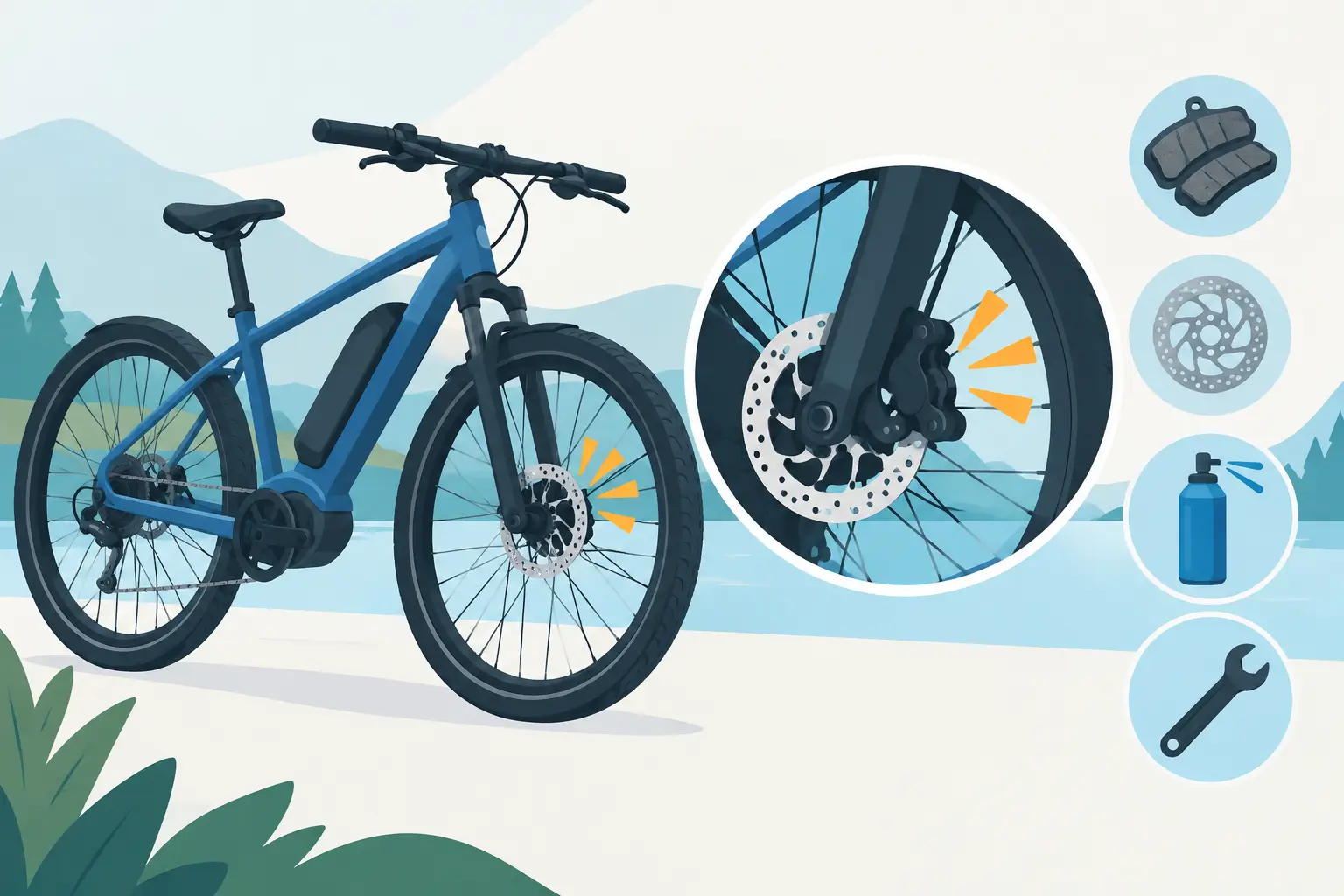
A sharp squeal at the stop sign can be embarrassing. More importantly, it can make you wonder whether your e-bike will stop properly on the next downhill. The top reasons ebike brakes squeal usually come down to pad and rotor condition, but an e-bike’s extra weight, higher average speed, and frequent braking can make a small issue show up faster.
Some brake noise is temporary and harmless. A brief squeak after washing your bike or riding through morning moisture is common. Persistent squealing, pulsing, weak braking, rubbing, or a brake lever that feels different than usual deserves a closer look.
Top Reasons Ebike Brakes Squeal
Contaminated brake pads or rotors
Contamination is one of the most common causes of loud disc brakes. Brake pads are designed to create friction against a clean metal rotor. When oil, chain lube, hydraulic brake fluid, spray cleaner residue, road grime, or even fingerprints get on either surface, the pads can vibrate instead of gripping smoothly. That vibration becomes the squeal you hear.
On an e-bike, contamination can come from a sloppy chain lubrication job, a leaking hydraulic caliper, or overspray from a cleaner. Fat-tire and off-road e-bikes also see more dust, water, and trail debris than a typical commuter bike.
A light film on the rotor may be cleaned with the proper brake cleaner and a clean lint-free towel. Pads are less forgiving. Once pad material has absorbed oil or fluid, cleaning may quiet them for a short time, but replacement is often the reliable fix. If hydraulic fluid caused the contamination, the leak must be repaired first or the new pads will be ruined too.
Wet rotors and humid conditions
If your brakes squeal only for the first few stops after rain, fog, a bike wash, or early-morning coastal moisture, water is likely the cause. A thin layer of moisture changes how the pad contacts the rotor. The noise should fade as the rotors warm and dry.
San Diego riders may notice this after coastal rides or when a bike has been stored outside overnight. Occasional wet-weather noise is not automatically a repair issue. However, noise that continues after several firm, controlled stops may point to contamination, glazed pads, or rotor wear rather than simple moisture.
Glazed pads from heat
E-bikes put more heat into their braking systems than many riders expect. A heavy e-bike, cargo load, passenger, steep descent, or delivery route with repeated stops can overheat the pads. When pad material gets too hot, it can develop a hard, shiny surface called glazing. Glazed pads have less consistent friction and commonly squeal.
This is especially common on smaller rotors, entry-level brakes, or bikes ridden on long descents while lightly dragging the brakes. Constant light braking builds heat without giving the system a chance to cool.
Sometimes a technician can restore lightly glazed pads by resurfacing them and properly bedding them in. If the pads are worn thin, contaminated, cracked, or badly hardened, replacement is the smarter choice. Upgrading rotor size or pad compound may also be worthwhile for riders who routinely carry cargo, ride steep terrain, or use powerful moped-style e-bikes.
Pads and rotors that have not been bedded in
New pads and rotors need a break-in process called bedding in. During this process, controlled stops transfer an even layer of pad material onto the rotor. Without that transfer layer, brakes may feel weak, grab inconsistently, or make noise.
A proper bed-in procedure usually involves repeated medium-to-firm stops from a safe speed, allowing the brakes to cool between cycles. It is not the same as locking up the wheel or holding the brake while stopped. A new brake system that squeals immediately after installation may simply need correct bedding, but the caliper alignment and rotor cleanliness should be checked first.
Misaligned calipers or a rubbing rotor
A disc brake caliper must sit squarely over the rotor with adequate clearance on both sides. If it is slightly off-center, the rotor may rub one pad as the wheel turns. A bent rotor can create the same symptom, often as a repeating scrape or chirp once per wheel revolution.
Rubbing does not always cause squealing, but it can create heat and uneven pad wear that leads to noise later. You may notice that the sound gets worse when leaning the bike into a turn, after reinstalling a wheel, or after the bike has been transported in a car rack.
Caliper alignment is a straightforward adjustment when all mounting hardware is in good condition. Rotor truing requires more care. Rotors are thin and can be damaged by aggressive bending. If the rotor has deep grooves, blue heat marks, cracks, or is below its minimum thickness, replacement is safer than trying to straighten it.
Worn pads, worn rotors, or loose hardware
Brake pads do not wear at the same rate on every e-bike. A commuter on mostly flat roads may get long pad life, while a heavier rider on a fast fat-tire e-bike can wear through pads much sooner. As pads thin, they hold and dissipate heat differently, which can increase noise. Some pad designs also use a wear indicator that makes noise when service is overdue.
Rotors wear too. Over time, the braking track becomes thinner and may develop ridges or uneven surfaces. A new set of pads installed on a heavily worn rotor may squeal or wear unevenly. Loose caliper bolts, pad retaining hardware, rotor bolts, or an adapter can also allow unwanted vibration.
Because brake hardware is safety-critical, this is not a place to guess. The correct torque matters, and so does checking that the wheel is seated properly in the dropouts or axle mounts.
Why E-Bike Brake Noise Can Be Different
An e-bike can weigh 50 to 90 pounds before adding a rider, cargo, locks, or a child seat. That additional mass changes how much energy the brakes must control. A 20 mph stop on a heavier e-bike places more demand on the rotors and pads than the same stop on a lightweight road bike.
There is also an electrical side to consider. Many e-bikes use brake levers with cutoff switches that signal the controller to stop motor power when braking. A squeal itself usually comes from the mechanical brake system, not the motor or controller. Still, a damaged brake lever, stuck cutoff sensor, or wiring problem can create a separate safety issue if motor assistance does not disengage when you pull the lever.
If the motor keeps pushing while braking, the lever feels loose, or a brake error appears on the display, stop riding until the system is diagnosed. Mechanical braking and electrical cutoff operation should work together.
What You Can Check Before Booking Service
Start with a simple visual check in good light. Look for an oily sheen on the rotor, wetness around a hydraulic caliper, very thin pads, loose bolts, or obvious rotor damage. Spin each wheel and listen for rubbing. Do not touch the rotor right after riding because it may be hot.
Avoid putting household oils, silicone sprays, multipurpose lubricants, or tire shine near disc brakes. These products can turn a minor noise issue into a pad-and-rotor replacement. If you clean the rotor, use a cleaner intended for disc brakes and keep chain lube well away from the braking surface.
You can also think about when the noise began. Did it start after a wash, a wet ride, a wheel removal, a long descent, a new pad installation, or a crash? That detail helps identify the real cause faster than replacing parts at random.
When Squealing Needs a Professional Brake Inspection
Book a brake inspection if the squeal is constant, braking power has dropped, the lever pulls close to the handlebar, the wheel rubs heavily, or you see fluid around a hydraulic brake. A grinding sound is more urgent. It may mean the pad material is gone and metal is contacting the rotor, which can quickly damage both components.
Riders with hydraulic brakes should also have the system checked if the lever feels spongy or changes feel suddenly. Air in the line, a fluid leak, worn pads, or a caliper issue can all affect lever feel. On cable brakes, stretched cables, worn housings, and poor adjustment can cause weak or noisy operation.
At FixEbike, brake service starts with finding the source of the noise rather than treating every squeal the same way. That may mean pad replacement and rotor cleaning, or it may reveal a leaking caliper, warped rotor, worn hardware, or an e-bike brake cutoff issue that needs attention.
Your brakes should be quiet enough to ride confidently, but the real goal is predictable stopping power. If a noise keeps returning or your e-bike does not feel right under braking, get it checked before the next fast ride or steep descent.