
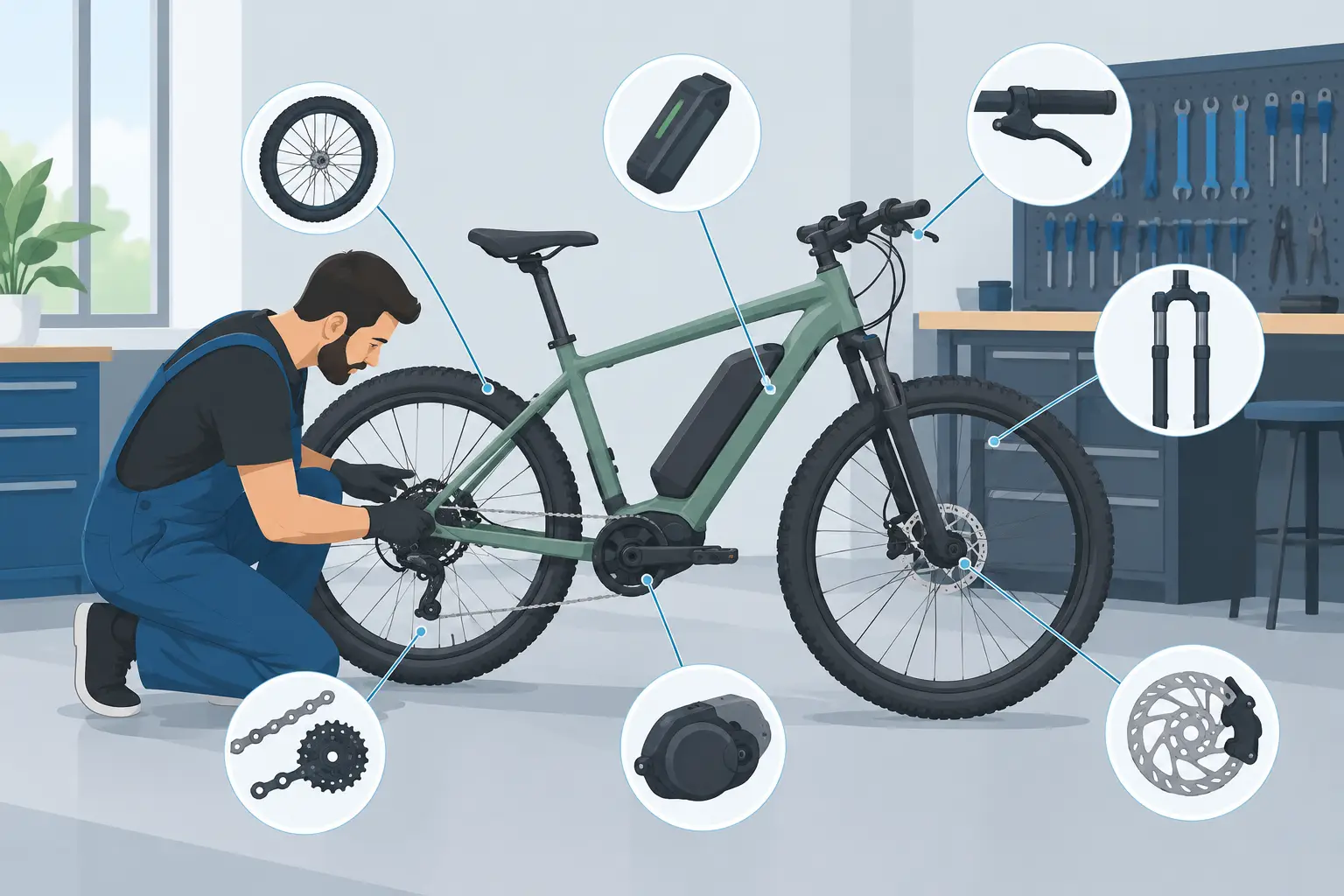
A charging light can be green while the battery is not delivering usable power. A motor can cut out because of a damaged wire, not because the motor has failed. And a brake issue on a heavy fat-tire e-bike may become a safety issue long before the rider realizes how much stopping power has been lost. That is why an ebike mechanic starts with diagnosis rather than guessing at parts.
For San Diego riders, e-bikes often handle daily commuting, school runs, delivery work, neighborhood errands, and weekend rides. When one stops working correctly, the goal is not simply to make an error code disappear. The goal is to identify the actual fault, make a repair that holds up, and return the bike in safe riding condition.
Why E-Bike Repair Requires More Than Bike Experience
A traditional bicycle mechanic understands wheels, chains, derailleurs, brakes, bearings, and tire wear. Those skills still matter on an electric bike. But an e-bike adds a battery, battery management system, controller, motor, display, wiring harness, sensors, and often brand-specific communication between those components.
A problem in one area can look like a problem somewhere else. For example, weak acceleration could come from a low-voltage battery, corroded battery contacts, a controller limiting output, a failing hall sensor, damaged phase wiring, or excessive mechanical drag. Replacing the motor first would be expensive and may not solve anything.
This is where a specialist earns their value. A qualified ebike mechanic checks the system methodically, using measurements and inspection to separate a battery fault from a motor fault, an electrical issue from a mechanical issue, and a worn component from a connection that simply needs repair.
The First Step Is Listening to the Symptoms
Good diagnostics begin before a tool touches the bike. The rider’s description can narrow the search quickly. Does the bike power on but not move? Does it lose power only under load or on hills? Did the issue begin after rain, a crash, transport on a bike rack, or a battery that was left unused for months?
Details matter. A display that turns off over bumps may point toward a loose connection, worn battery cradle, or broken wire inside the frame. A motor that runs intermittently after several minutes may indicate heat-related controller trouble or a connection that changes as components warm up. If pedal assist works but the throttle does not, the mechanic will inspect the throttle circuit and settings rather than assuming the whole electrical system is bad.
The best repair process does not treat every warning light or loss-of-power complaint the same way. It follows the symptoms to the most likely test points.
What an Ebike Mechanic Tests During Diagnosis
Battery health and charging performance
The battery is often blamed first, and sometimes it is the cause. A technician checks more than whether it charges. They look at pack voltage, charging behavior, connector condition, voltage drop under load, and signs that the BMS is preventing normal output.
A battery can show normal voltage at rest but sag severely when the motor demands current. That can cause sudden shutoffs, reduced power, or a display that restarts on a hill. In other cases, the charger, charge port, battery mount, or wiring between the battery and controller is the real issue.
Battery repair depends on the design and condition of the pack. Some problems are repairable at the connection or BMS level. Others involve aging cells or safety concerns that make replacement the more sensible choice. A responsible shop explains that distinction clearly rather than promising a repair that cannot be done safely.
Motor, hall sensor, and phase-wire checks
Hub motors are durable, but they are not immune to damage. Water intrusion, overheated wiring, worn internal components, impact damage, and connector failures can all lead to rough running, vibration, noise, or total loss of drive.
The mechanic inspects motor cables and connectors, tests phase and hall sensor circuits, and checks whether the wheel spins freely. A phase-wire issue can produce jerky movement or a motor that hums without turning. Hall sensor faults can cause rough starts, inconsistent power, or controller errors. These symptoms may feel dramatic to the rider, but the correct repair depends on test results, not on how severe the sound is.
A motor replacement is sometimes necessary. It is not always the first answer. Repairing a damaged cable, connector, hall sensor circuit, or wheel-related problem can save a rider from replacing a part that still has plenty of life left.
Controller, display, and communication faults
The controller manages power between the battery and motor. When it receives incorrect signals, loses communication with the display, or develops an internal failure, the bike may refuse to assist, display an error code, or act unpredictably.
Testing includes checking supply voltage, signal wiring, connectors, display operation, brake cutoff inputs, pedal-assist sensor signals, and throttle response where applicable. On some bikes, the problem is a loose pin or moisture in a connector. On others, the controller has failed and needs replacement. The difference is important because controllers, displays, and harnesses are not interchangeable across every e-bike model.
Mechanical safety items
Electrical performance is only half the job. E-bikes are heavier and faster than many standard bicycles, which puts more demand on brakes, tires, spokes, chains, and drivetrains.
A complete inspection should include brake pad thickness, rotor condition, hydraulic or cable adjustment, tire condition and pressure, wheel trueness, spoke tension, headset play, bearing wear, chain stretch, and shifting performance. A bike with restored motor power but weak brakes is not ready to return to the road.
When to Bring Your E-Bike In Instead of Continuing to Ride
Some issues deserve prompt attention. Stop riding and have the bike checked if the battery becomes unusually hot, swells, smells burnt, has visible case damage, or has been involved in a serious impact. Do not continue charging a battery that shows these warning signs.
You should also schedule service if the motor cuts out in traffic, the bike surges unexpectedly, braking feels weak or noisy, wires are exposed, connectors are melted, or the rear wheel has a new grinding or binding sound. A small electrical issue can become a larger failure when high current continues to pass through a loose or damaged connection.
Less urgent symptoms still benefit from early diagnosis. Reduced range, intermittent display behavior, squealing brakes, shifting problems, and a charger that only works at certain angles are easier to address before they leave you stranded.
What to Expect From a Professional Repair Visit
A proper shop visit should be straightforward. Bring the e-bike, battery, charger, key if the battery uses one, and any display or error-code information you have. If the problem happens only under certain conditions, explain those conditions. Mention recent crashes, water exposure, aftermarket accessories, or prior repair attempts as well.
The technician should inspect the bike, perform relevant tests, and explain what was found before major work begins. Some repairs are quick, such as a loose connector, brake adjustment, tire replacement, or damaged external wire. Others require deeper testing, part sourcing, or component-level work. Turnaround depends on the fault, the bike’s design, and parts availability.
At FixEbike, the focus is on finding the root cause first, whether the issue involves a battery, hub motor, controller, display, wiring harness, brakes, or drivetrain. That approach helps avoid unnecessary replacements and gives riders a clearer picture of what their repair actually requires.
A Few Habits That Prevent Expensive Problems
Keep battery contacts clean and dry, and make sure the battery clicks securely into its mount before every ride. Avoid storing a battery in extreme heat, especially in a parked vehicle, and do not leave it fully discharged for long periods. Use the charger intended for the battery and inspect its cord and connector occasionally.
Check tire pressure and brake feel regularly. On e-bikes, low tire pressure and dragging brakes reduce range while putting extra stress on the motor and battery. If your bike is ridden on rough roads, trails, or beach-adjacent areas, inspect cables and connectors more often for rubbing, moisture, and corrosion.
Most e-bike problems give a warning before they become a complete breakdown. If the bike feels different, sounds different, or loses power in a way it never did before, getting it checked early is usually the faster and more affordable path back to riding.