
A 65-pound fat-tire e-bike carrying a rider, cargo, and a battery can build far more stopping force than a standard bicycle. That is why asking when should ebike brake pads be replaced is not just a maintenance question. It is a safety question, especially for commuters, family riders, and anyone riding San Diego hills, busy streets, or long bike paths.
Brake pads are a wear item. They are designed to sacrifice material against the rotor so your e-bike stops predictably. Waiting until they grind, squeal constantly, or lose stopping power can turn a simple pad replacement into a rotor, caliper, or hydraulic brake repair.
When Should Ebike Brake Pads Be Replaced?
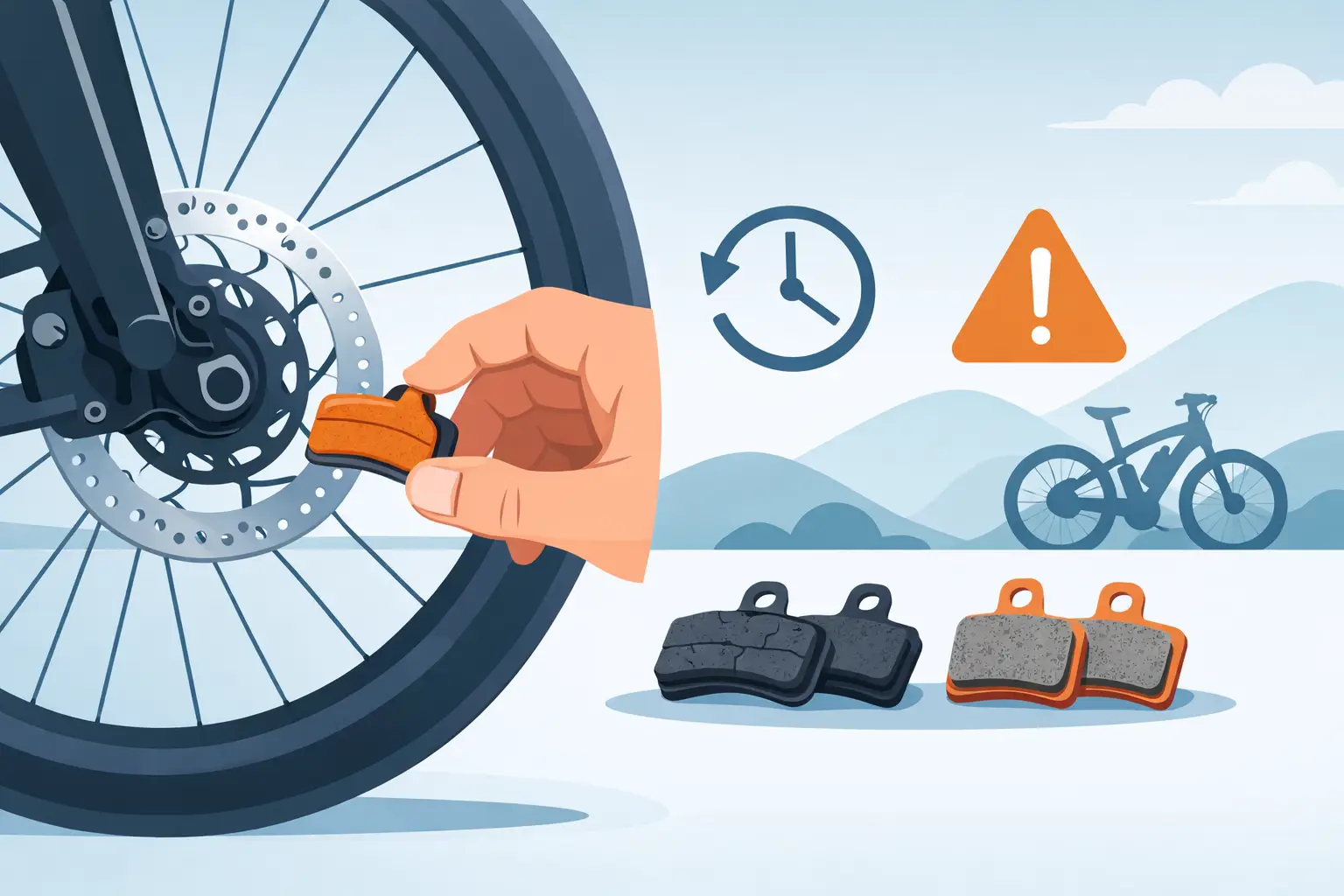
Replace e-bike brake pads when the friction material is about 1 mm thick or less. The friction material is the part bonded to the metal backing plate. Once it becomes very thin, braking performance drops, heat builds faster, and the metal backing plate can contact the rotor.
For many riders, the more practical answer is to replace pads as soon as they show clear wear symptoms, rather than trying to stretch every last mile out of them. E-bike pad life varies widely. A lightweight rider on flat roads may get well over 1,000 miles from a set of pads. A delivery rider, a heavier e-bike, frequent steep descents, or regular stop-and-go riding can wear through pads much sooner.
The rear pads often wear faster because many riders rely heavily on the rear brake. However, the front brake provides most of the stopping power during controlled braking. Check both ends. Do not assume the front pads are fine just because the rear brake is the one making noise.
The Signs Your Brake Pads Are Due
The easiest warning sign is reduced braking power. If you need to pull the lever closer to the handlebar or squeeze harder than usual to slow down, inspect the pads and braking system. A soft lever can also point to air in a hydraulic line, a fluid leak, or a caliper issue, so pads are not always the whole problem.
A sharp squeal does not automatically mean the pads are worn out. Pads can squeal because of dust, water, rotor contamination, glazing from overheating, or a caliper that is slightly out of alignment. But noise combined with weak braking, visible thin pads, or a scraping sound should be addressed promptly.
Grinding is more urgent. A metal-on-metal grinding sound can mean the pad material is gone and the backing plate is cutting into the rotor. Stop riding if possible. Continuing to use the brake may damage the rotor enough that it needs replacement, and it can significantly reduce control in an emergency stop.
Look for these symptoms together rather than relying on one clue:
- Brake levers need more force or travel than they used to.
- Braking feels inconsistent, pulsing, or less confident on descents.
- You hear grinding, repeated harsh scraping, or squealing that does not improve.
- The bike pulls to one side or the caliper rubs after braking.
- You can see very little pad material through the caliper opening.
How to Check E-Bike Brake Pad Thickness
Many disc brake calipers have an opening that lets you view the edge of the pads without removing the wheel. Use a flashlight and look at the pad from the rotor side. You should see the metal backing plate and a distinct layer of friction material between the backing plate and rotor.
If the friction layer is around 1 mm or less, schedule replacement. If you cannot clearly see the material, removing the wheel and pads gives a more accurate inspection. This also lets you compare the inner and outer pads. Uneven wear can indicate a sticky caliper piston, bent rotor, seized slide hardware on mechanical brakes, or poor caliper alignment.
Do not judge pad wear by lever feel alone. Hydraulic brakes self-adjust as pads wear, so the lever can still feel reasonably firm even when the pads are nearly finished. Conversely, a lever that pulls to the grip may be caused by a hydraulic problem even if the pads have usable material left.
Why E-Bike Pads Wear Faster Than Regular Bike Pads
An electric bike is usually heavier, faster, and used for longer trips than a conventional bicycle. Those factors add heat and friction every time you brake. The motor also makes it easier to reach speed quickly between intersections, which creates more frequent hard stops.
Riding style matters. Coasting into stops and applying both brakes progressively is easier on pads than accelerating hard and braking late. Long downhill sections require particular care. Dragging a brake continuously overheats pads and rotors, which can glaze the pad surface and reduce friction. On a descent, use controlled, intermittent braking and alternate pressure as conditions allow instead of holding one lever lightly for the entire hill.
San Diego-area riders also deal with dry dust, coastal moisture, and occasional wet-road grime. Dust can make brakes noisy. Chain lube, spray cleaners, tire shine, or hydraulic fluid on the rotor can contaminate pads. Contaminated pads sometimes can be cleaned, but replacement is often the reliable fix when braking performance has been affected.
Pad Material Matters, But It Is Not the Only Factor
Organic or resin pads are generally quieter and offer good initial bite. They are common on commuter e-bikes and work well for normal street riding. Their trade-off is faster wear and reduced performance when they get very hot or wet.
Sintered or metallic pads typically last longer and handle heat better. They are often a better match for heavy fat-tire e-bikes, moped-style models, cargo loads, and riders who regularly descend hills. They can be noisier and may wear rotors more quickly, particularly if the rotor is not rated for metallic pads.
Semi-metallic pads sit between the two. The correct choice depends on the brake manufacturer, rotor rating, rider weight, terrain, and how the bike is used. Installing the wrong pad shape or material can cause fitment problems, poor performance, or excessive rotor wear.
Replace Pads Before the Rotor Becomes the Next Repair
Every brake job should include a rotor inspection. Rotors have a minimum thickness stamped on them or specified by the manufacturer. A rotor that is too thin cannot manage heat safely and is more likely to warp or wear unevenly. Deep grooves, blue heat marks, cracking, or a pronounced outer lip are also reasons to inspect more closely.
New pads should not be installed on a rotor that is badly contaminated, deeply scored, or below its service limit. Doing so can ruin the new pads quickly. The caliper should also be centered so the rotor runs freely between the pads without constant rubbing.
For hydraulic brakes, pushing the pistons back to fit new thicker pads must be done carefully. If the pistons are dirty, forcing them inward can pull grit into the seals. A technician can clean and reset the pistons, inspect for leaks, align the caliper, and bleed the system if lever feel calls for it.
Do Not Confuse Brake Problems With E-Bike Electrical Problems
Some e-bikes use brake lever cutoff sensors that tell the controller to stop motor power when a brake is applied. If the motor cuts out unexpectedly, stays disabled after releasing a lever, or behaves erratically during braking, worn pads may not be the cause.
The issue could be a stuck brake lever sensor, damaged wiring at the handlebar, a connector problem, or a controller fault. Mechanical braking and electrical brake-cutoff functions are separate systems, although both affect how the bike behaves. A proper diagnosis checks the brake hardware first, then verifies that the cutoff signal is operating correctly.
How Often Should You Inspect the Pads?
For regular e-bike use, inspect the pads every one to two months and before any long ride, steep trail day, or busy commuting season. Riders who use an e-bike daily for work, carry passengers or cargo, or ride heavy moped-style bikes should inspect them more often.
If you are unsure whether the pads have enough material, it is better to have them checked before they reach the backing plate. At FixEbike, brake service can include pad and rotor inspection, caliper alignment, hydraulic troubleshooting, and a check for related cutoff or wiring issues when the bike has electrical braking symptoms.
Your brakes should feel predictable every time you leave the driveway. If they are noisy, weak, rubbing, or simply overdue for inspection, handle it before the next fast downhill or unexpected stop asks more from the system than it can safely deliver.