
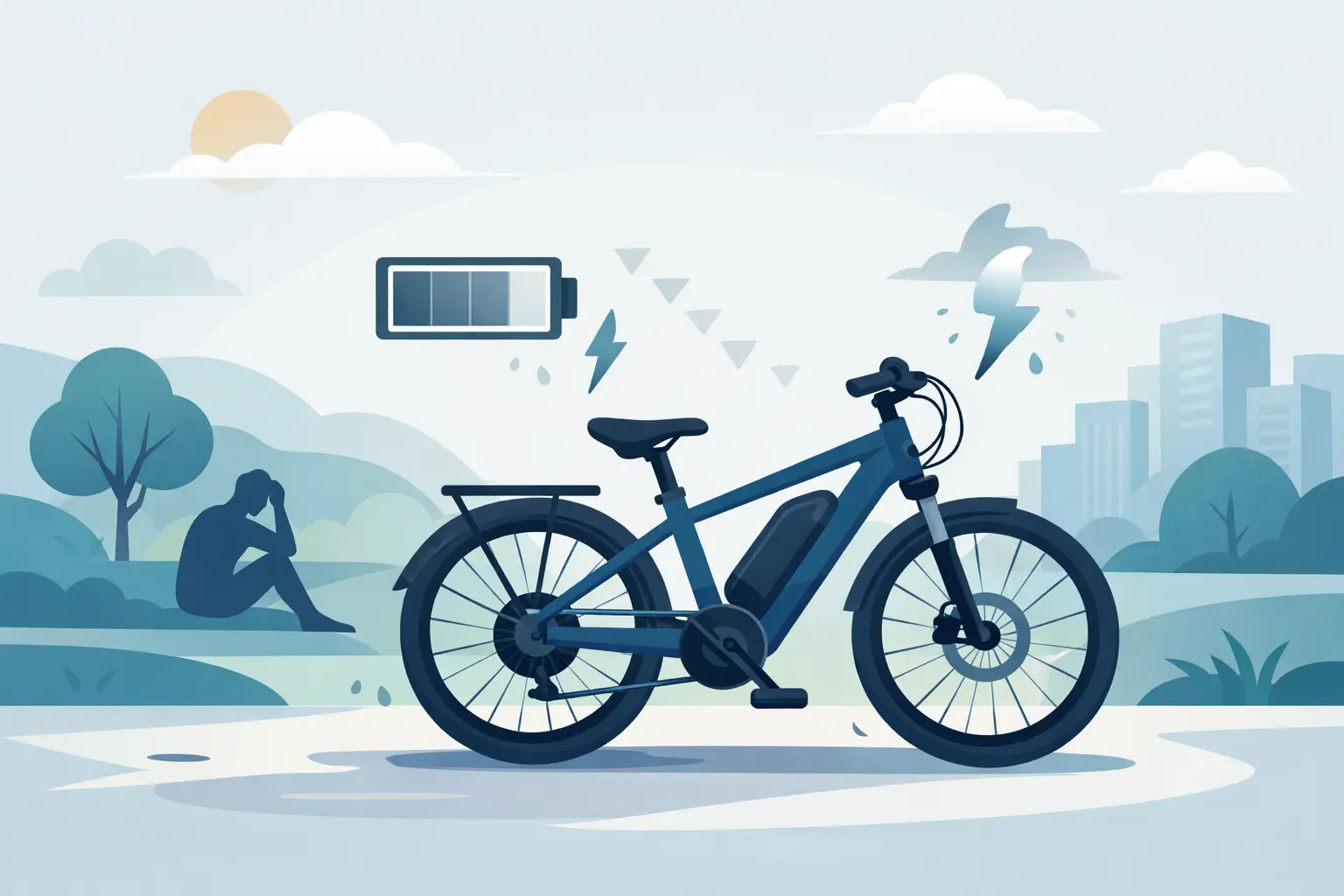
You press the throttle or start pedaling, and the bike still moves – just not like it used to. If you’re asking, why is my ebike losing power, the answer usually comes down to one of a few systems: battery output, controller behavior, motor faults, wiring resistance, or mechanical drag. The hard part is that several different problems can feel exactly the same from the rider’s seat.
Power loss can show up in different ways. Sometimes the bike starts strong and fades on hills. Sometimes it cuts in and out under load. In other cases, top speed drops, acceleration feels weak, or pedal assist becomes inconsistent. Those details matter, because they help narrow down whether the problem is electrical, mechanical, or a combination of both.
Why is my ebike losing power under load?
If your ebike feels normal on a stand or during light riding but loses power when climbing, accelerating, or carrying extra weight, voltage sag is one of the first things to suspect. A battery can show a decent charge level on the display and still struggle when current demand increases. That is common with aging packs, weak cells, poor battery balance, or a battery management system that is limiting output.
This is also why a simple battery percentage reading does not tell the full story. Displays often estimate charge based on voltage, and voltage drops when the motor is working hard. A battery that looks half full at rest may dip too low under load, causing weak performance or intermittent cutouts.
Heat can make this worse. In San Diego, riders using fat-tire bikes, moped-style ebikes, or delivery bikes often put higher demand on the system, especially on long climbs or in stop-and-go riding. A battery or controller that is already marginal may show symptoms much faster in real-world riding than it would during a quick parking lot test.
The most common causes of ebike power loss
Battery wear or internal battery faults
Battery problems are the most common reason an ebike loses power. Over time, cells lose capacity and resistance increases. That means the pack may still charge, but it cannot deliver current the way it did when new. The result is reduced range, weaker acceleration, and power drop under strain.
Sometimes the issue is not general age but a specific fault inside the pack. One weak cell group, a failing BMS, poor internal connections, or balance issues can all create noticeable power loss. In those cases, replacing random external parts will not fix the problem.
Loose, damaged, or overheated connections
A poor electrical connection can act like a choke point in the system. Battery terminals, discharge connectors, phase wire connections, and signal plugs can all develop resistance from corrosion, looseness, heat damage, or water intrusion. When that happens, voltage drops where it should not, and the bike feels weak or inconsistent.
This kind of issue often gets worse gradually. Riders may notice the bike cutting out on bumps, losing power after a few minutes of riding, or showing intermittent display and motor behavior. Burn marks, melted plastic, or a hot connector after riding are all warning signs.
Controller problems
The controller manages how power is delivered from the battery to the motor. If it is failing, the bike may still turn on but perform poorly. Common symptoms include sluggish takeoff, jerky assist, reduced torque, random shutdowns, or error codes that come and go.
Controllers can fail from heat, moisture, internal component damage, or mismatched replacement parts. It also depends on the bike. Some systems are fairly simple and standalone. Others rely on communication between the display, controller, sensor network, and battery. In those setups, one fault can create a power problem that looks like something else.
Motor or hall sensor faults
A hub motor or mid-drive motor with internal issues can lose power without failing completely. Hall sensor problems, phase wire damage, worn internal components, or partial shorting may cause rough operation, poor startup torque, vibration, or low power at certain speeds.
With hub motors in particular, hall sensor failure is a common cause of weak or erratic power delivery. The motor may still spin, but timing can be off, and performance drops badly under load. Riders often describe this as the bike feeling like it is fighting itself.
Brake sensor or cutoff issues
Many ebikes use brake cutoffs that tell the system to stop motor output when the brake lever is pulled. If a brake sensor sticks, shifts out of alignment, or develops a wiring problem, the bike may act like the brakes are partly engaged even when you are trying to ride.
This can create low power, delayed throttle response, or total motor inhibition. It is easy to overlook because the bike may otherwise appear normal.
Pedal assist sensor problems
If the main complaint is weak or inconsistent assist rather than total motor weakness, the pedal assist system may be the issue. A misaligned cadence sensor, damaged torque sensor, loose magnet ring, or communication fault can reduce how much assistance the bike gives you.
This is where rider feedback matters. If throttle performance is strong but pedal assist is weak, that points in a different direction than a bike that is weak in every mode.
Mechanical drag that feels like electrical power loss
Not every power complaint starts in the electrical system. A dragging brake, underinflated tires, worn bearings, misaligned wheel, chain issues, or drivetrain binding can make an ebike feel slow and underpowered. On heavier bikes, even a small amount of drag is noticeable.
This is one reason proper diagnosis matters. Electrical and mechanical issues can overlap, and the bike may have more than one problem at the same time.
What you can check before booking repair
Start with the simple things. Make sure the battery is fully charged with the correct charger and that it is locking into place properly. Check whether the display is showing the correct assist level and whether any error codes appear, even briefly. If the bike has a removable battery, inspect the contacts for dirt, corrosion, or signs of heat.
Then look at the connectors you can safely access without opening sealed components. If anything looks loose, discolored, wet, or partially unplugged, that is worth attention. Do not force connectors apart if they are stubborn, and do not probe battery terminals with metal tools.
Give the bike a basic mechanical check too. Spin the wheels and listen for rubbing. Make sure the brakes release fully. Check tire pressure. If the chain is dry, rusty, or unusually tight, that can add drag.
Pay attention to patterns during riding. Does power drop only on hills? Only when the battery is below half? Only with pedal assist, or also with throttle? Does the bike shut off completely or just feel weak? Good symptom details often shorten the diagnostic process.
When power loss points to a deeper electrical problem
If the battery percentage looks normal but performance drops sharply under load, if the bike cuts in and out, or if connectors are heating up, you are likely past the point of a quick home fix. The same is true if the motor makes abnormal noise, the display shows communication errors, or the bike has already had parts replaced without solving the problem.
This is where a diagnostic-first approach matters. Ebike power loss is often caused by voltage drop, signal errors, or component interaction rather than one obviously broken part. Swapping a controller because the internet said it might help can waste time and money if the real issue is a failing battery pack, damaged hall sensor, or high-resistance wiring fault.
At a shop like FixEbike, this kind of problem is usually approached by testing system voltage behavior under load, checking battery output, inspecting wiring and connectors, verifying sensor signals, and narrowing down whether the limitation is coming from the battery, controller, motor, or communication path.
Why the problem can get worse if you keep riding
A weak battery can become a no-start battery. A hot connector can melt. A controller struggling with bad phase or hall signals can suffer further damage. Even a simple dragging brake can overheat pads and rotors and make the bike harder on the electrical system.
That does not mean every low-power symptom is an emergency, but it does mean it is smarter to diagnose it early. Catching the cause while the bike still runs usually gives you more repair options than waiting until it quits completely.
Why is my ebike losing power if it still turns on?
Because turning on and producing full power are two different things. The display, lights, and basic controls can work while the battery cannot sustain current, the controller is limiting output, the motor is misfiring, or the wiring is dropping voltage where it should not. A bike that powers up normally can still have a serious performance fault.
If your ebike has become slower, weaker, or inconsistent, trust that change. Ebikes usually give warning signs before complete failure. The sooner the symptoms are checked with the right tools, the better your chances of getting back to reliable, normal power without replacing parts you did not need.