
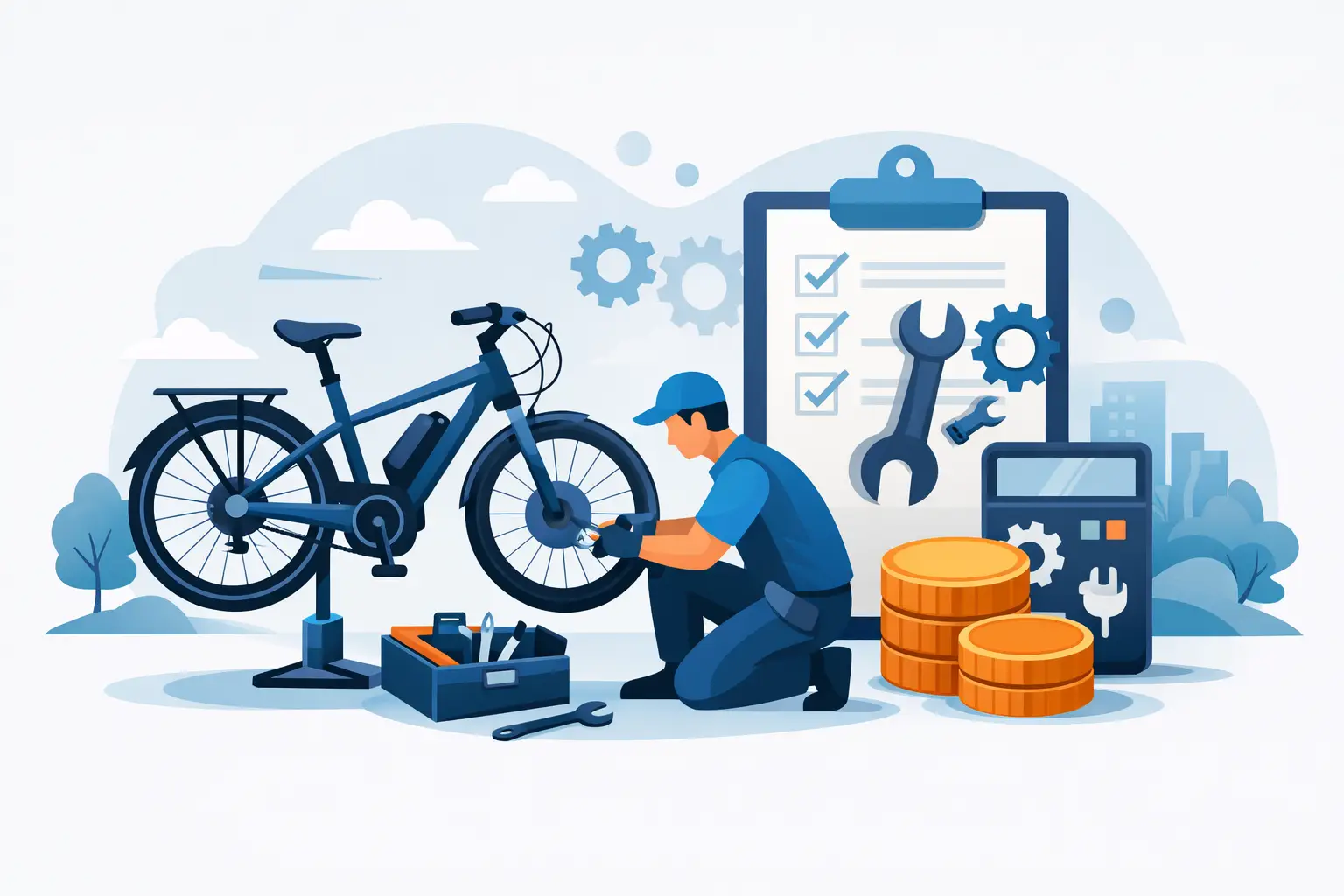
One rider comes in needing a brake adjustment and leaves with a modest bill. Another has an e-bike that powers on but will not move, and the repair can turn into a full electrical diagnosis with multiple failed parts. That is why the first honest answer to how much does ebike repair cost is this: it depends on what actually failed, how long it takes to confirm the cause, and whether the fix is mechanical, electrical, or both.
For most e-bike owners, the real frustration is not just the price. It is the uncertainty. A flat tire is easy to understand. A battery that charges to 100% but cuts out under load, a motor that jerks, or a display that throws a communication error is different. Those problems need testing before anyone can quote them accurately.
How much does ebike repair cost for common problems?
A basic e-bike repair might land in the same range as a regular bicycle service if the issue is mechanical. Brake adjustments, tube replacements, tire installs, chain work, and standard tune-up items are usually the lower end of the cost spectrum. In many shops, minor mechanical service may start around $30 to $75 for simple labor, while broader tune-ups often range from about $90 to $180 depending on the bike’s condition and setup.
Electrical and powertrain work usually costs more because diagnosis takes time and requires a technician who understands how the system components interact. If your bike has intermittent power loss, a controller fault, charging issues, a dead display, wiring damage, or a motor problem, the price often starts with a diagnostic fee. That fee commonly falls around $50 to $150, depending on how involved the testing is.
Once the cause is confirmed, total repair cost can range widely. A simple connector repair or wiring fix may stay under $150 to $250. A controller replacement may run a few hundred dollars with parts and labor. Battery repair, motor repair, or multiple electrical faults can push the total higher.
What affects ebike repair pricing most?
The biggest factor is whether the problem is obvious or hidden. If a tire is shredded or a brake rotor is bent, the issue is visible. If the bike only shuts off on hills, loses assist after ten minutes, or flashes an error code that could point to three different components, diagnosis becomes the job.
Brand and parts availability matter too. Some e-bikes use standard connectors and readily available replacement parts. Others use proprietary batteries, locked controllers, unusual displays, or integrated wiring routed through the frame. Even when the failed part is known, sourcing and installing it may take more labor than expected.
Bike style also changes pricing. A heavy fat-tire bike, moped-style e-bike, cargo setup, or scooter can take longer to disassemble, test, and reassemble than a lightweight commuter model. Accessing the controller on one bike might take ten minutes. On another, it can mean removing multiple panels, battery trays, or harnesses just to reach the fault.
Then there is the difference between replacing a part and repairing one. In some cases, a damaged connector, phase wire, hall sensor lead, fuse, or charging port can be repaired at a reasonable cost. In other cases, replacement is the safer choice.
Typical ebike repair cost by service type
Mechanical service is usually the most predictable. Flat tire or tube replacement often falls around $35 to $80 plus parts, depending on wheel type and how difficult the motor wheel is to remove. Brake adjustments may cost $25 to $50, while brake pad replacement and rotor service can range from about $40 to $120 or more depending on the brake system. Full tune-ups generally cost more because they include multiple adjustments and safety checks.
Battery-related work has a broader range. A basic charging-port issue, fuse issue, or external connection problem may be relatively affordable if the battery pack itself is healthy. But internal battery faults are different. If the battery has weak cell groups, a failed BMS, voltage imbalance, or water damage, repair pricing can rise quickly. Some battery repairs may fall in the low hundreds. Full battery replacement often costs several hundred dollars and sometimes much more depending on voltage, capacity, and brand.
Motor repair can also vary a lot. If the issue is external, such as a damaged cable or connector, the bill may stay manageable. If the problem is inside the motor, such as worn gears, hall sensor failure, bearing issues, or phase damage, labor increases because the motor must be opened and tested. A repair may cost far less than a full motor replacement, but not every motor is worth rebuilding.
Controller and display issues often sit in the middle. If testing confirms the controller has failed and a compatible replacement is available, the total may be straightforward. If the bike uses a proprietary system and the display, controller, and battery all need communication testing, the job can take longer and cost more.
Why diagnostics matter before quoting a repair
A lot of riders want a price before bringing the bike in, which makes sense. The problem is that many e-bike symptoms overlap. A bike that will not power on could have a dead battery, a failed charger, a blown fuse, a bad ignition switch, a damaged harness, a controller issue, or a display problem. Swapping parts without testing can waste money fast.
A proper diagnostic process helps narrow the fault before parts are ordered. That means checking battery voltage, load behavior, continuity, connector condition, controller output, brake cutoff signals, throttle response, PAS input, and communication between components when applicable. You are not just paying for someone to look at the bike. You are paying to avoid guesswork.
For riders in San Diego dealing with intermittent issues, this matters even more. Heat, vibration, storage conditions, and coastal moisture can all contribute to connector corrosion, wiring problems, and battery performance complaints that are easy to misread if the shop only handles standard bicycle repairs.
When ebike repair is worth it and when it may not be
Most repairs are worth doing when the frame, battery platform, and core electronics are still serviceable. A brake overhaul, tire service, wiring repair, controller replacement, or tune-up can extend the life of a good bike for far less than replacing it.
The tougher cases are lower-cost bikes with multiple failures at once. If the battery is weak, the controller is damaged, the rear wheel has motor issues, and the bike also needs tires and brakes, the total can start approaching the value of the bike itself. That does not always mean you should give up on it. It means you should ask for a diagnosis first and then make a decision based on the full picture.
A good repair shop will explain the trade-off clearly. Sometimes the right move is a focused safety repair to keep the bike rideable for now. Sometimes it makes sense to fix the root electrical issue and hold off on cosmetic or nonessential items. Sometimes replacement is the smarter financial call.
How to keep ebike repair costs down
The cheapest repair is usually the one that happens early. If your brakes start rubbing, your battery begins cutting out occasionally, or your display flickers over bumps, getting it checked sooner can prevent a smaller issue from turning into a larger one.
Basic maintenance helps too. Keep tires inflated properly, avoid forcing charging ports, store the battery out of extreme heat when possible, and do not ignore loose connectors or damaged wiring near folding joints and rear axles. Many expensive repairs start with a simple problem that went too long.
It also helps to bring clear information when you drop the bike off. If you can describe when the issue happens, whether it appears under load, what error code you saw, and whether the bike was recently dropped, washed, or stored for a long period, diagnosis usually moves faster.
If you are asking how much does ebike repair cost because your bike is acting up right now, the most practical answer is to separate the job into two parts: diagnosis and repair. The diagnostic tells you what failed and what it will take to fix it. From there, you can decide whether you want the fastest solution, the lowest-cost safe solution, or the longer-term fix.
At a shop like FixEbike, that process is designed to take the mystery out of difficult e-bike problems, especially the ones other shops may not want to touch. And for most riders, that clarity is just as valuable as the repair itself. The best next step is not guessing the price from a symptom alone. It is getting the bike tested so you know exactly what you are dealing with.