
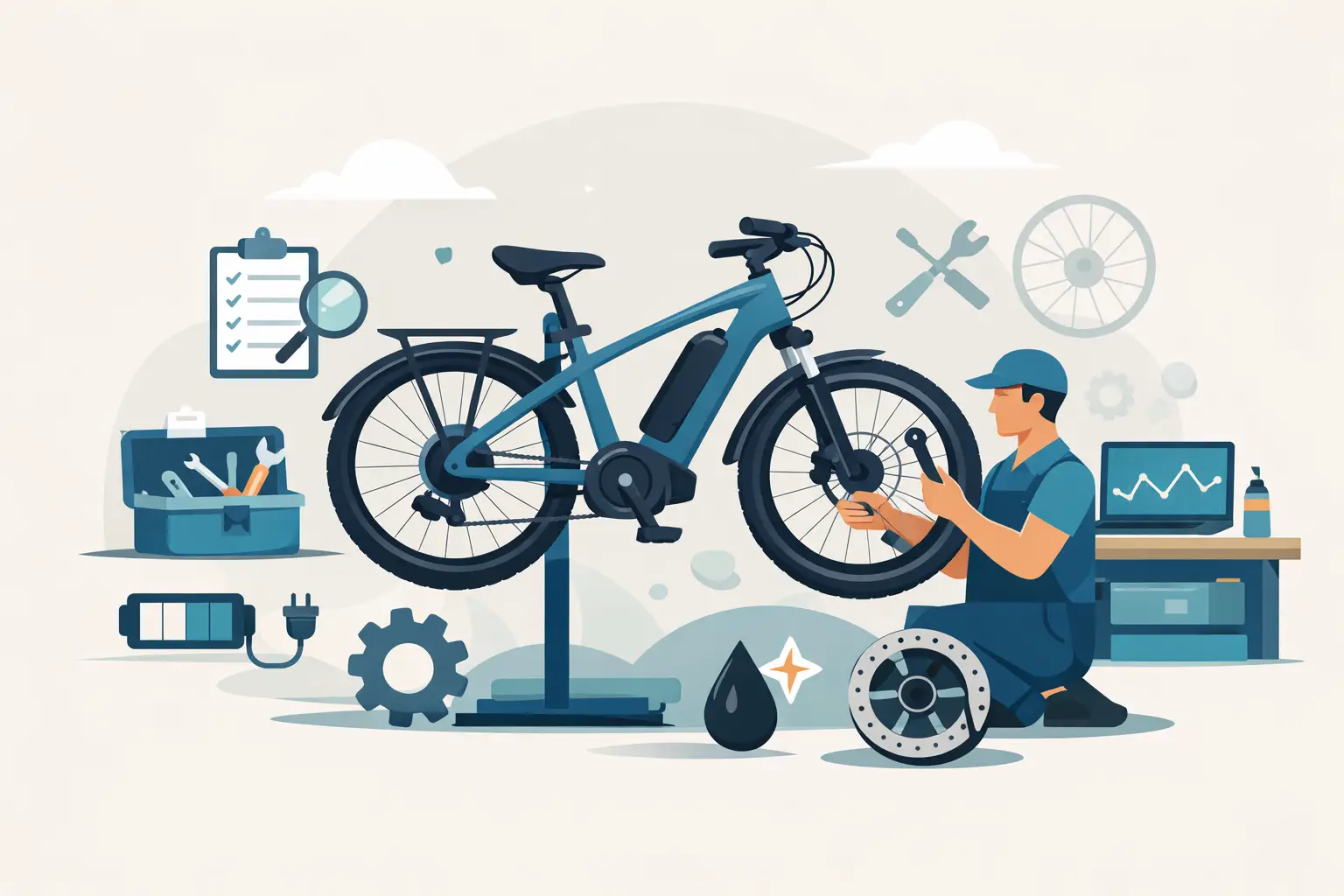
A brake rub that starts on Monday can turn into a dead battery complaint by Friday – not because the battery failed, but because the bike has been fighting itself every mile. That is why an electric bike tune up is not just a basic bike shop checklist with a battery bolted on. On an e-bike, mechanical drag, electrical faults, and worn parts often show up together, and if you miss one, the real problem stays on the bike.
For riders around San Diego, that matters more than most people realize. Heat, hills, stop-and-go commuting, cargo loads, and long recreational rides all put stress on motors, brakes, tires, connectors, and drivetrains. A proper tune-up keeps the bike safer, extends component life, and helps catch small faults before they turn into expensive repairs.
What an electric bike tune up should actually cover
A true e-bike tune-up has two sides: mechanical service and electrical inspection. If only one side gets attention, the job is incomplete.
On the mechanical side, the bike should be checked for brake performance, rotor alignment, pad wear, tire condition, wheel trueness, spoke tension, chain wear, shifting quality, bearing play, and fastener tightness. Suspension, if the bike has it, should also be inspected for basic function and obvious wear. These are the same areas that matter on a regular bicycle, but on an e-bike they wear faster because the bike is heavier and often ridden harder.
On the electrical side, the service should include a close look at battery condition, charging behavior, mount security, wiring integrity, connector fit, display operation, controller response, motor engagement, sensor communication, and any stored or active fault symptoms. Even if the bike is still powering on, weak connections, intermittent cutouts, voltage drop, or early charging issues can already be present.
That is the difference between a quick adjustment and a real service appointment. One makes the bike feel a little better today. The other helps prevent a no-start, a power loss issue, or a brake problem next week.
The mechanical side of an electric bike tune up
Brakes usually deserve the most attention. E-bikes carry more speed and more weight, so pads wear faster and rotors take more heat. If the brakes feel soft, make noise, pulse, or require too much lever travel, that should be corrected before it becomes a safety issue. On many bikes, a tune-up will involve pad inspection, rotor alignment, caliper adjustment, and in some cases a hydraulic bleed or replacement of worn parts.
The drivetrain also matters more than riders expect. A stretched chain or poorly adjusted derailleur does more than create noise. It reduces efficiency, increases wear on the cassette and chainring, and can make the motor work harder than it should. Mid-drive bikes are especially sensitive here because the motor power goes through the chain. If the drivetrain is neglected, parts wear quickly and shifting under load becomes rough.
Tires and wheels are another common weak point. Because e-bikes are heavier, they are harder on tubes, sidewalls, rims, and spokes. Low tire pressure can reduce range, increase punctures, and make handling feel unstable. Loose spokes or a wheel that is going out of true can lead to bigger failures if ignored. During a good tune-up, the tires should be checked for wear, cracking, embedded debris, and proper inflation, while the wheels should be inspected for straightness and tension.
Then there are the basics that still matter: headset play, crank tightness, pedal condition, axle security, frame hardware, fenders, racks, and lights. On a commuter or cargo-style e-bike, these details affect daily reliability. A loose rack or axle nut is not a small issue on a bike that sees real transportation use.
Why electrical diagnostics matter during an electric bike tune up
This is where many tune-ups fall short. An e-bike can ride and still have an electrical problem developing in the background.
A battery may charge to full but sag under load. A display may work normally while the controller is starting to show communication issues. A motor may feel slightly weak because of sensor faults, connector damage, phase wire resistance, or internal wear. Riders often describe these problems as “random” because they come and go, especially when the bike is hot, under heavy load, or low on charge.
A proper electrical check looks for those patterns. The battery should be assessed for fit, charging behavior, output consistency, and visible signs of trouble such as heat damage, corrosion, broken tabs, or weak terminals. Wiring should be inspected for pinch points, rubbed insulation, water intrusion, and loose connectors. The display and controls should be tested for normal operation, and the motor should be checked for smooth engagement, unusual noise, and consistent power delivery.
Some issues cannot be confirmed by appearance alone. That is where a diagnostic-first approach matters. If a bike has cutout problems, charging failures, throttle issues, error codes, or inconsistent assist, the tune-up may need to move beyond adjustment into electrical troubleshooting. That could involve checking voltage, communication between components, hall sensor behavior, controller function, or battery management system symptoms.
For many riders, this is the point where a specialized e-bike shop makes a real difference. General bicycle service can handle a lot of mechanical work, but advanced motor, battery, and control system faults require a different skill set.
When a tune-up is enough, and when it is not
Sometimes the bike just needs service. Other times it needs repair.
If your e-bike is riding normally but has brake noise, rough shifting, low tire pressure, minor wobble, or a general drop in ride quality, a tune-up is usually the right first step. The same is true for seasonal maintenance, routine wear, or a used bike that needs a full once-over.
If the bike will not turn on, will not charge, loses power under load, flashes errors, stops assisting intermittently, or has clear battery or motor symptoms, a standard tune-up is probably not enough by itself. The bike may still need mechanical service, but the electrical issue has to be diagnosed directly. Trying to treat that like a simple adjustment wastes time and often delays the real fix.
There is also a middle ground. Some bikes come in for a tune-up and reveal bigger faults during inspection. Worn brake pads might be paired with a bent rotor and a failing brake sensor. Poor range might turn out to be a combination of low tire pressure, dragging brakes, and battery performance issues. On e-bikes, stacked problems are common.
How often should you get an electric bike tune up?
It depends on how you ride.
For a casual recreational rider, once or twice a year may be enough if the bike is stored well and ridden moderately. For a commuter, family rider, delivery rider, or anyone putting serious mileage on a heavier bike, service should happen more often. Frequent braking, curb impacts, cargo weight, and long daily use speed up wear on chains, pads, tires, wheels, and electrical contact points.
A few signs should move you up the schedule: reduced range, squealing brakes, loose handling, shifting hesitation, wobbling wheels, battery connection issues, charging inconsistency, or any intermittent power behavior. If the bike feels different, it is usually for a reason.
In San Diego, dust, coastal moisture, and heat also play a role. Connectors, battery mounts, and exposed wiring do not have to be fully failed to start causing trouble. Catching those issues early is a lot cheaper than replacing major components later.
What riders should do before bringing the bike in
Do not try to “fix” a wiring problem with tape and hope for the best. That usually makes diagnosis harder.
Instead, make a short note of what the bike is doing. Mention when the issue happens, whether it appears on hills or under throttle, how the battery has been charging, and whether any error messages show up on the display. If there is a noise, note whether it happens while pedaling, braking, coasting, or using assist. Those details help separate a mechanical problem from an electrical one much faster.
It also helps to bring the charger and key if the bike uses one. If the complaint involves charging, battery fit, startup behavior, or display communication, having the full system available can save an extra trip.
Choosing the right shop for an e-bike tune-up
Not every tune-up is equal, and not every shop is set up for e-bike diagnostics. If your bike only gets a quick chain lube and brake tweak, that may help for the moment, but it does not answer the bigger question: is the whole system healthy?
For e-bike owners dealing with real use, real mileage, and real reliability concerns, the better approach is a service process that checks both sides of the machine. That means the bike gets mechanical attention where it needs it and electrical diagnosis when symptoms point deeper. That is how shops like FixEbike approach service, especially when a bike has more going on than simple wear and tear.
A good electric bike tune up should leave you with more than a smoother ride around the block. It should give you confidence that the brakes are ready, the drivetrain is not chewing itself up, and the electrical system is not waiting to strand you on the next trip.